Short answer: a pellet plant is a row of machines that prepare the material, compress it and finish it. For wood pellets the order is: coarse shredding, drying, fine grinding, pelleting, cooling, screening and bagging. For animal feed: grinding, dosing, mixing, steam conditioning, pelleting, cooling, screening and bagging. Conveyors link them all. The pellet mill is the heart, but the plant only produces as much as its slowest step. Below, each machine in order, what it does and when it can be skipped.
Wood and biomass pellet plant, step by step
1. Coarse shredding
If the raw material arrives as branches, slabs or large chips, it is first reduced with a shredder or chipper. If it is already sawdust or shavings, this step is not needed. The difference between a shredder and a mill is covered in branch shredder or hammer mill.
2. Drying
Wood must enter the pellet mill at even moisture, generally between 10 and 15%. Fresh sawdust is usually much wetter, and the dryer often ends up being one of the largest and most expensive machines in the plant. How to size it by moisture is in dryer for sawdust and biomass. If the material is already dry, skip it.
3. Fine grinding
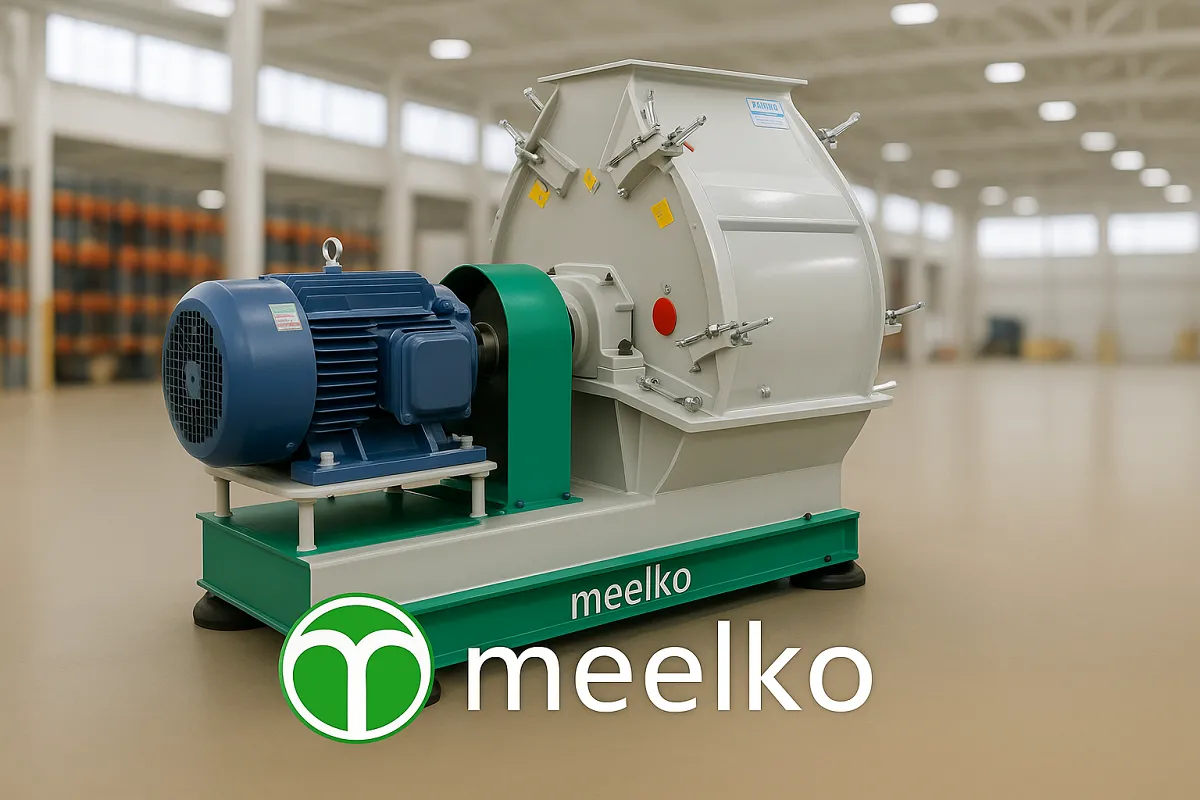
A hammer mill reduces the material to even particles of a few millimeters so the pellet mill can compact them well. See hammer mill for grain, which applies to biomass too.
4. Buffer hopper and feeder
An intermediate bin and a variable-speed screw feeder deliver material to the pellet mill at a steady rate. Without them, the pellet mill runs in bursts and chokes.
5. Pelleting
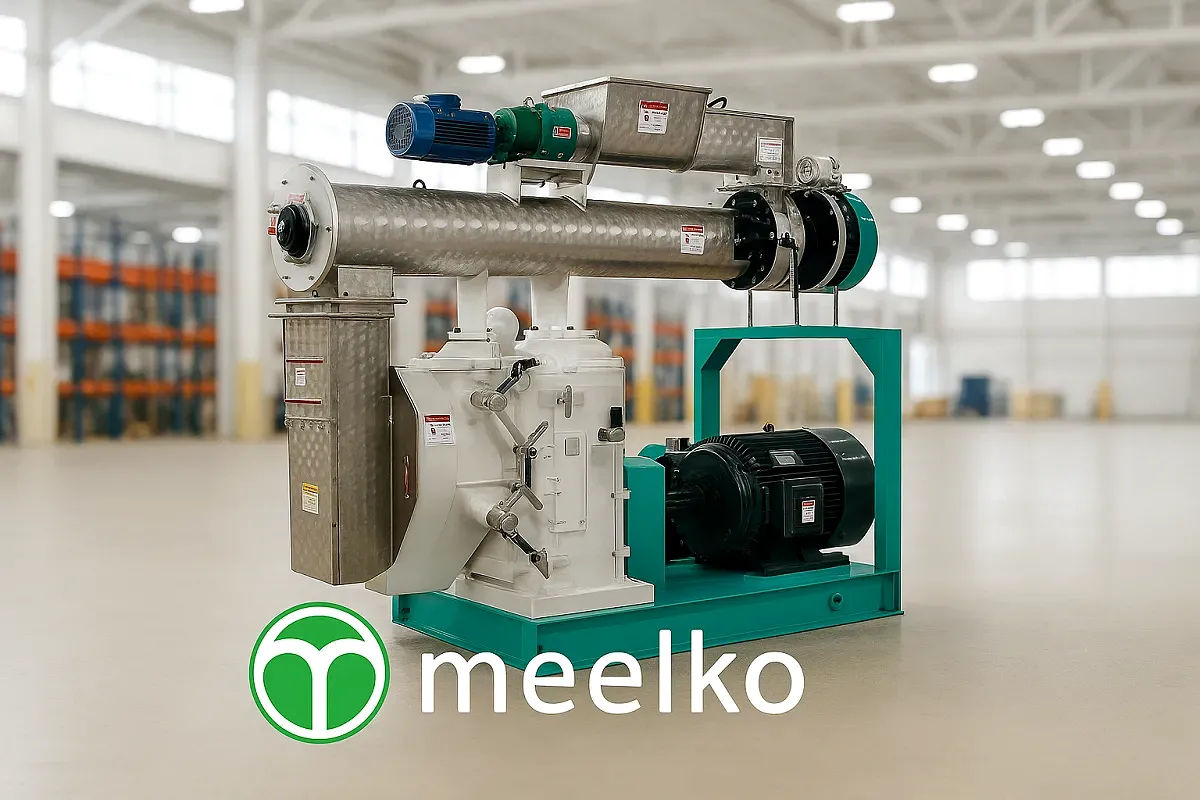
Flat die up to about 500 to 800 kg/h; ring die for continuous production and larger volumes. Which one fits is covered in industrial pellet mill.
6. Cooling
The pellet leaves hot and soft. A counterflow cooler brings it to ambient temperature with air, and that is when it hardens. Without cooling, it breaks in the bag.
7. Screening
A vibrating screen removes fines and broken pellets, which go back to the start to be re-pelleted.
8. Bagging or silo
15 kg bags for stoves, big bags or bulk silo for industrial boilers. What the stove market demands is covered in wood pellets for stoves.
Animal feed pellet plant, step by step
- Grain intake and cleaning: screen and magnet to remove stones and metal.
- Grinding with a hammer mill and a fine 2 to 3 mm screen.
- Dosing of each ingredient by recipe: ground grain, protein meals, vitamin premix and minerals.
- Mixing in a horizontal mixer, where liquids such as molasses or oil are also added. See horizontal mixer.
- Steam conditioning: heats and moistens the mash so the pellet comes out firm and digestible. It needs a boiler.
- Pelleting, cooling and screening, as with wood.
- Bagging.
A small farm making its own feed can simplify: mill, mixer and a flat die pellet mill, without steam. At commercial scale, the conditioner makes the quality difference.
What ties it together: conveying
Between machines, material moves on screw conveyors, bucket elevators and belts. A small plant is often loaded by hand; from a few hundred kilos per hour it pays to automate. Which to use where is covered in screw conveyor, bucket elevator or belt.
How the line is sized
Every machine must keep up with the pellet mill, and the ones before it should have more capacity than it does. The mill, for instance, yields less with a fine screen, and the dryer depends on how much water it must remove. A practical rule: the mill at least 30% above the pellet mill.
Meelko's complete plants range from 800 kg/h to 10 t/h and are built around the pellet mill:
- 800 kg/h plant: modular line for biomass and forage.
- 1,000 kg/h plant: with MKRD420C-W ring die pellet mill, mixer, steam conditioner, variable-speed feeder and cooler.
- 2,000 kg/h plant: twin ring die pellet mill line.
- 3,000 kg/h plant: with MKRD508C-W, steam conditioner, cooler, vibrating screen and conveying by bucket elevators and screws.
- 5,000 kg/h and 10,000 kg/h plants: for large scale.
To choose the size from the tons you will sell, see pellet plant capacity; for investment and consumption figures, pellet plant costs and profitability. To run the numbers yourself, the pellet line sizing tool builds the line step by step.
An example
A sawmill has fresh sawdust and wants to produce 1 ton of pellets per hour to sell in bags. Its line: intake hopper, dryer sized for its moisture, hammer mill of 1.3 t/h or more, buffer hopper with feeder, 1 t/h ring die pellet mill, cooler, screen and bagger. It needs no shredder, since sawdust is already small, and no steam conditioner. The biggest item in its investment is the dryer.
Common mistakes
- Buying the pellet mill first and thinking about the rest later. Without proper drying and grinding, it will not perform.
- Undersizing the dryer when the material arrives wet.
- Forgetting the cooler and screen. They are what make the pellet reach the customer intact.
- Sizing everything to the limit. The plant produces only as much as its slowest machine.
Conclusion
A pellet plant is planned end to end: prepare the material (shred, dry, grind, mix), compress it and finish it (cool, screen, bag). Meelko, an American brand of agro-industrial machinery, offers each machine separately and complete pellet plants from 800 kg/h to 10 t/h. Tell us your raw material, its moisture and how many tons you want to produce, and we will design the line.