The question everyone asks before investing
After our guide on installing and commissioning industrial pellet factories, the most frequent question we get is always the same: how much does it cost to produce a ton of pellets and how long does it take to recover the investment? The honest answer is that it depends on three variables you control: the size of the line, the price of your raw material and the real operating hours. This article puts reference numbers on each one so you can build your own calculation.
The figures below apply to pellet lines for wood, agricultural biomass, alfalfa and animal feed built with Meelko equipment. They are project references, not quotations: every plant changes with the inlet moisture, the country and the cost of energy.
Initial investment by line size
There are three clearly distinct scales, and the jump between them is not linear.
Small and semi-industrial scale: 150 to 550 kg/h
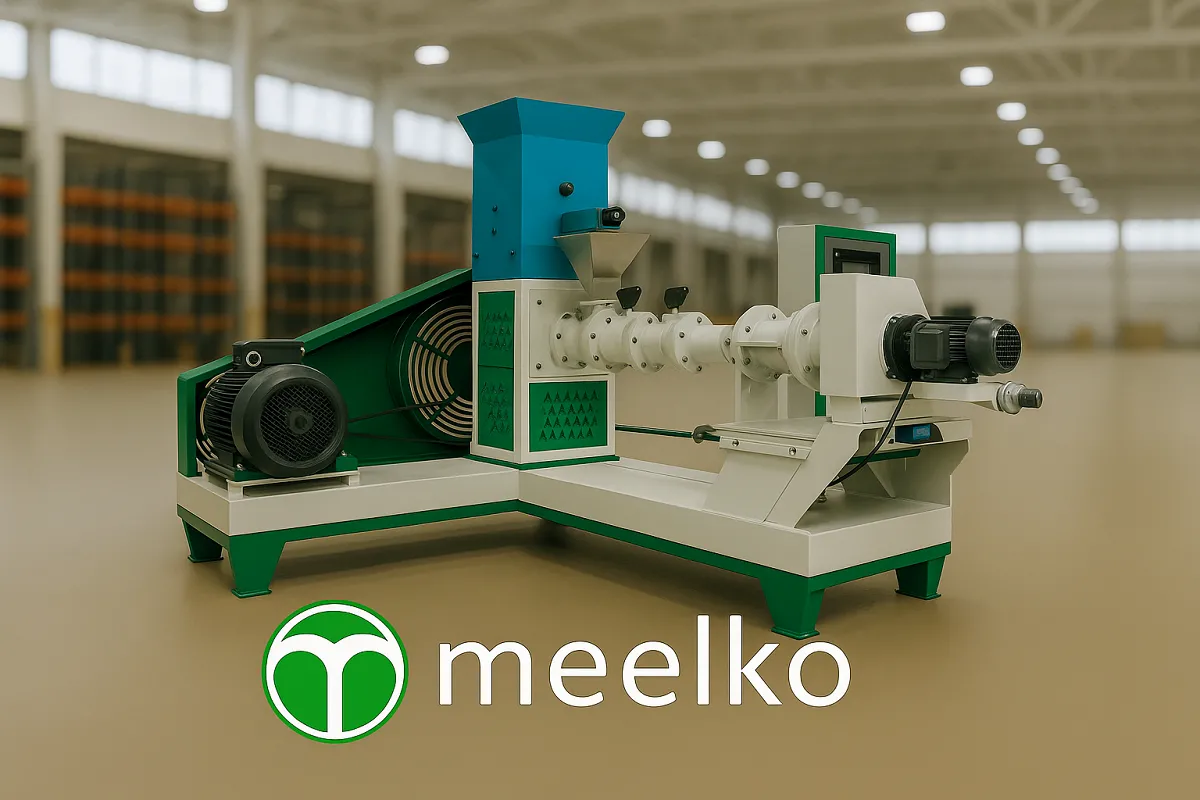
Here the core machine is the flat die pellet mill. A 200 mm model with a 7.5 kW motor produces about 150 kg/h; a 260 mm model with 15 kW reaches 550 kg/h. The pellet mill alone represents USD 3,000 to 8,000. Adding a hammer mill, mixer, cooler and bagging unit, a complete semi-industrial line lands between USD 12,000 and 25,000. This is the scale we cover in detail in our article on flat die pellet mills for beginners.
Industrial scale: 500 kg/h to 3 tons per hour
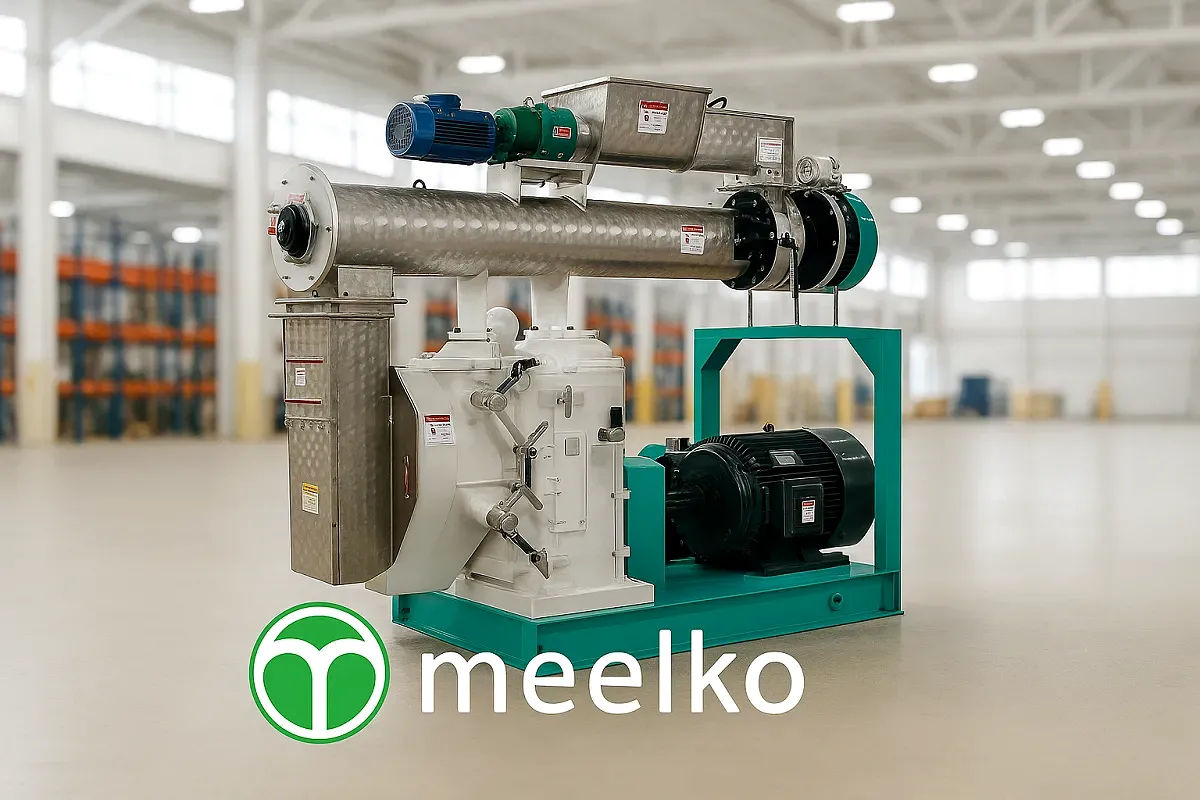
From half a ton per hour upwards it pays to move to a ring die pellet mill, which runs continuously with lower wear per ton. Meelko's references are clear: the MKRD350C-W with 50 kW for 500 to 700 kg/h, the MKRD420C-W with 90 kW for 1 to 2 t/h and the MKRD508C-W with 110 kW for 2 to 3 t/h. A ring die pellet mill costs between USD 42,000 and 72,000 depending on the model. The complete plant, with chipping, drying, grinding, conditioning, cooling and bagging, sits between USD 120,000 and 200,000 for 1 to 2 t/h.
Large industry: 5 tons per hour and above
With a double line of ring die pellet mills, a high-capacity rotary dryer and automation, a 5 t/h plant starts at USD 350,000, and 10 t/h plants are quoted as turnkey projects.
Rule of thumb: doubling capacity raises the investment by 50% to 70%, not 100%. That is why the investment cost per ton produced falls with scale, and why many plants that start at 500 kg/h are born with the floor space for a second line already planned.
Energy consumption per ton
Electricity is the second operating cost after raw material, and the easiest one to get wrong. You have to look at the whole line, not just the pellet mill.
- Pellet mill alone: 40 to 60 kWh per ton with a ring die; 50 to 80 kWh per ton with a flat die, which is less efficient at the same output.
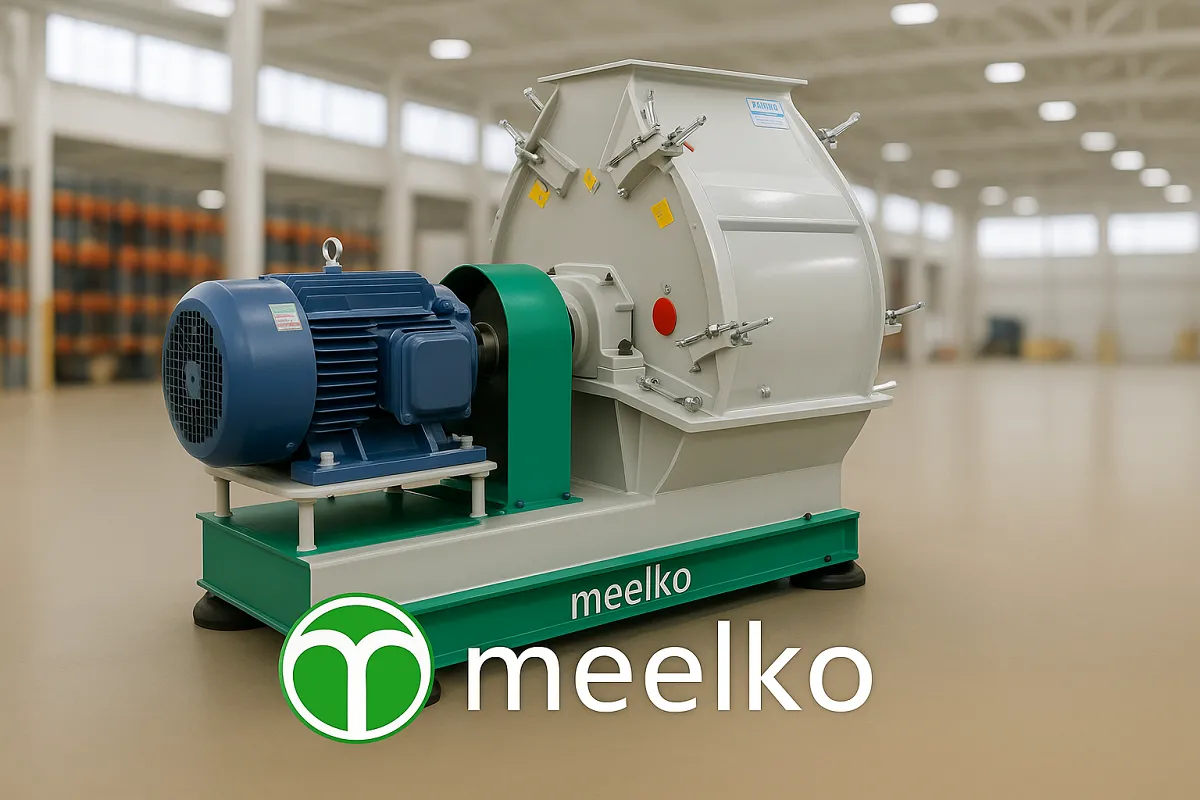
- Grinding: 15 to 30 kWh per ton depending on the inlet size. Wood chips demand far more than sawdust.
- Drying: the big consumer when the raw material arrives wet. Taking sawdust from 45% to 12% moisture means burning 8% to 12% of your own output as fuel, or its equivalent in gas.
- Cooling, conveying and bagging: 5 to 10 kWh per ton.
Reference total: 70 to 120 kWh per ton in a wood plant with drying, and 45 to 70 kWh per ton in an alfalfa or feed plant that receives dry material. At an energy cost of USD 0.10 per kWh, that means USD 5 to 12 per ton.
Real output per shift
Nominal capacity is what the data sheet says; real capacity is what you invoice. The gap comes from die changes, cleaning, moisture swings and start-ups. In well-run plants, effective output is around 75% to 85% of nominal. A nominal 1 t/h line delivers in practice 6 to 7 tons per 8-hour shift, that is 130 to 150 tons a month on one shift and 260 to 300 on two.
This is the figure with the biggest impact on payback: the same investment that takes four years to recover on one shift is recovered in little more than two years on two shifts.
Cost per ton: the full calculation
For a 1 t/h wood pellet plant, running two shifts 250 days a year, the reference production cost breaks down as follows:
- Raw material: USD 20 to 60 per ton of pellets, depending on whether it is sawdust from your own sawmill, purchased residue or chipped wood. This is the most decisive variable.
- Energy: USD 7 to 12 per ton.
- Labor: 2 operators per shift; USD 10 to 20 per ton depending on the country.
- Wear parts: dies and rollers last 800 to 1,500 tons in wood; USD 4 to 8 per ton.
- Packaging and in-plant logistics: USD 5 to 10 per ton in 15 kg bags; less in big bags.
- Depreciation: a USD 150,000 investment over 5 years and 3,000 tons a year adds USD 10 per ton.
Total: USD 60 to 120 per ton. With regional market prices for bagged wood pellets between USD 150 and 250 per ton, and alfalfa or feed pellets above that, the gross margin per ton lands between USD 60 and 130.
Return on investment
With those numbers, a 1 t/h plant producing 3,000 tons a year generates a gross margin of USD 180,000 to 390,000 per year. After fixed costs, major maintenance and sales expenses, payback sits between 14 and 30 months. At the semi-industrial scale of 300 to 500 kg/h, with investments of USD 15,000 to 25,000, payback is usually even faster in months, although the absolute income is smaller.
The three factors that most shorten or stretch that period are: owned or very cheap raw material, two shifts instead of one and a customer secured before start-up. No machine replaces the last one.
Conclusion
A pellet plant is a business of volume and controlled costs: raw material and operating hours weigh more than any other factor. Meelko manufactures flat die and ring die pellet mills and complete plants from 300 kg/h to 10 tons per hour, shipped directly throughout the Americas with no intermediaries. If you want a calculation with your own project numbers, write to us with your raw material type, its moisture and the volume you plan to sell.