The Growing Market for Alfalfa Pellets
Global alfalfa pellet production exceeded 8 million tonnes in 2024, with the Middle East, China, and Japan importing over 60 % of all traded volume. Pellets offer higher bulk density (600–700 kg/m³) compared to bales (180–250 kg/m³), which slashes shipping costs by up to 65 % per tonne of dry matter. Achieving consistent pellet quality, however, starts well before the pellet press—it begins at the grinding stage, where particle size determines binding capacity, moisture retention, and final pellet durability.
Preparing the Alfalfa: From Field to Grinder
Haymaking and Initial Drying
Alfalfa is typically harvested at 10–15 % bloom stage to maximise crude protein (18–22 % DM). After cutting, the crop is field-dried or conditioned to reach a moisture content of 12–15 %—the ideal window for safe storage and efficient grinding. Bales arriving at the plant should be inspected for mould, foreign objects, and moisture uniformity.
Pre-Grinding Size Reduction
Large square bales (1.2 × 0.9 × 2.4 m) must first pass through a bale breaker or shredder that reduces material to pieces of roughly 50–100 mm. This step prevents bridging and uneven feeding at the main grinder.
Types of Grinding Mills
Hammer Mills
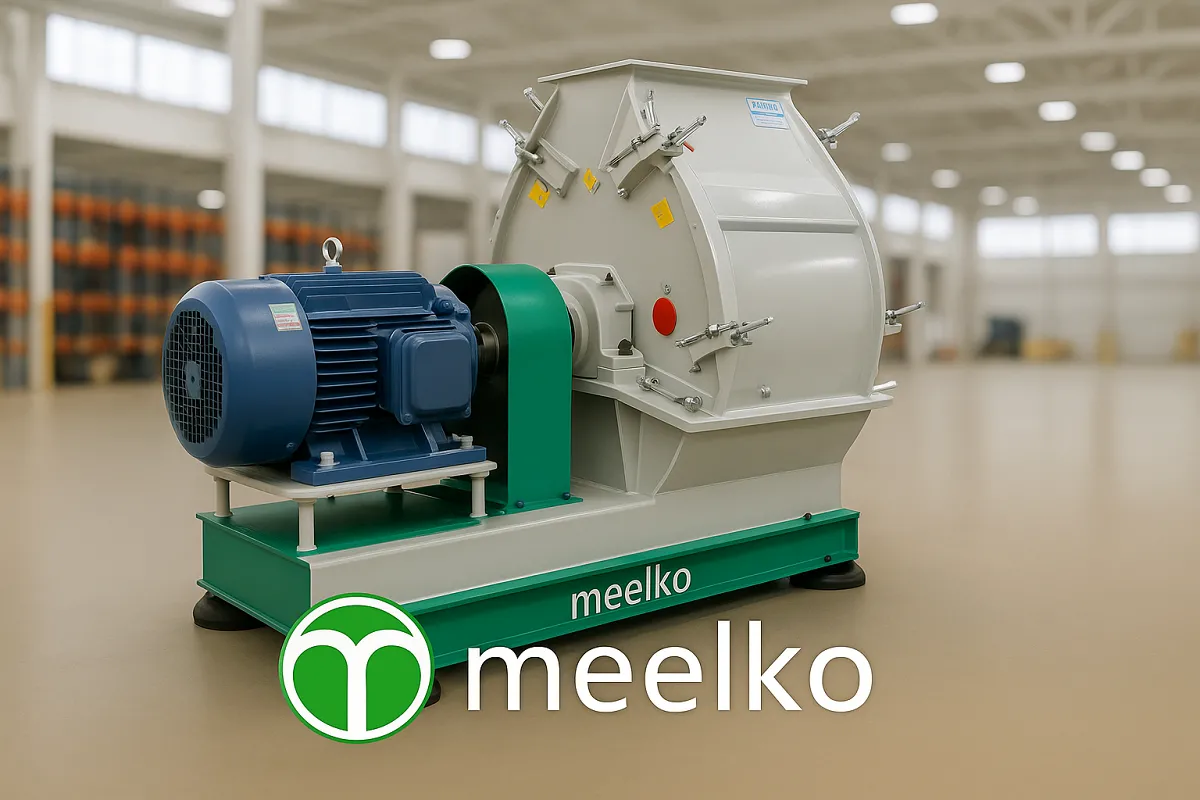
Hammer mills are the industry standard for alfalfa grinding. They use swinging hammers rotating at 1,500–3,600 RPM to impact the material against a perforated screen. Key advantages include:
- High throughput: 2–15 tonnes/hour depending on screen size and motor power (55–250 kW).
- Versatility: the same mill handles varying moisture levels and fibre lengths.
- Ease of maintenance: hammers can be flipped or replaced in under 30 minutes.
Knife Mills (Cutting Mills)
Knife mills use sharp blades rotating at 500–1,200 RPM to shear the fibres rather than crushing them. They produce a more uniform particle distribution with fewer fines (< 0.5 mm), which can improve pellet appearance. However, throughput is typically 30–50 % lower than a hammer mill of equal power.
Recommended Screen Sizes and Their Impact
The screen aperture determines the maximum particle length exiting the mill. For alfalfa pellets, the recommended range is 2–6 mm:
- 2–3 mm screens: produce fine particles ideal for small-diameter pellets (4–6 mm) used in aquaculture feeds and pet food blends. Energy consumption rises by 20–35 % versus coarser screens.
- 3–4 mm screens: the most common setting for standard 6–8 mm livestock pellets. Offers the best balance between pellet durability index (PDI > 95 %) and energy cost.
- 4–6 mm screens: suitable for large-diameter pellets (8–12 mm) or when alfalfa is blended with grains. Grinding energy drops 15–25 %, but PDI may decrease to 90–93 % without proper conditioning.
Moisture: The Critical Variable
Grinding alfalfa at moisture levels below 10 % generates excessive dust (up to 12 % fines), increases wear on hammers, and raises explosion risk. Above 16 %, material clogs screens and reduces throughput by up to 40 %. The optimal grinding moisture window is 12–14 %. Plants often install an inline NIR moisture sensor before the mill to adjust feed rate in real time.
The Complete Pelletising Process
- Bale breaking: reduces bales to 50–100 mm pieces.
- Primary grinding: hammer mill with 3–4 mm screen reduces material to target particle size.
- Conditioning: steam at 75–85 °C is injected for 30–60 seconds to gelatinise natural starches and activate lignin as a binder. Moisture rises to 15–17 %.
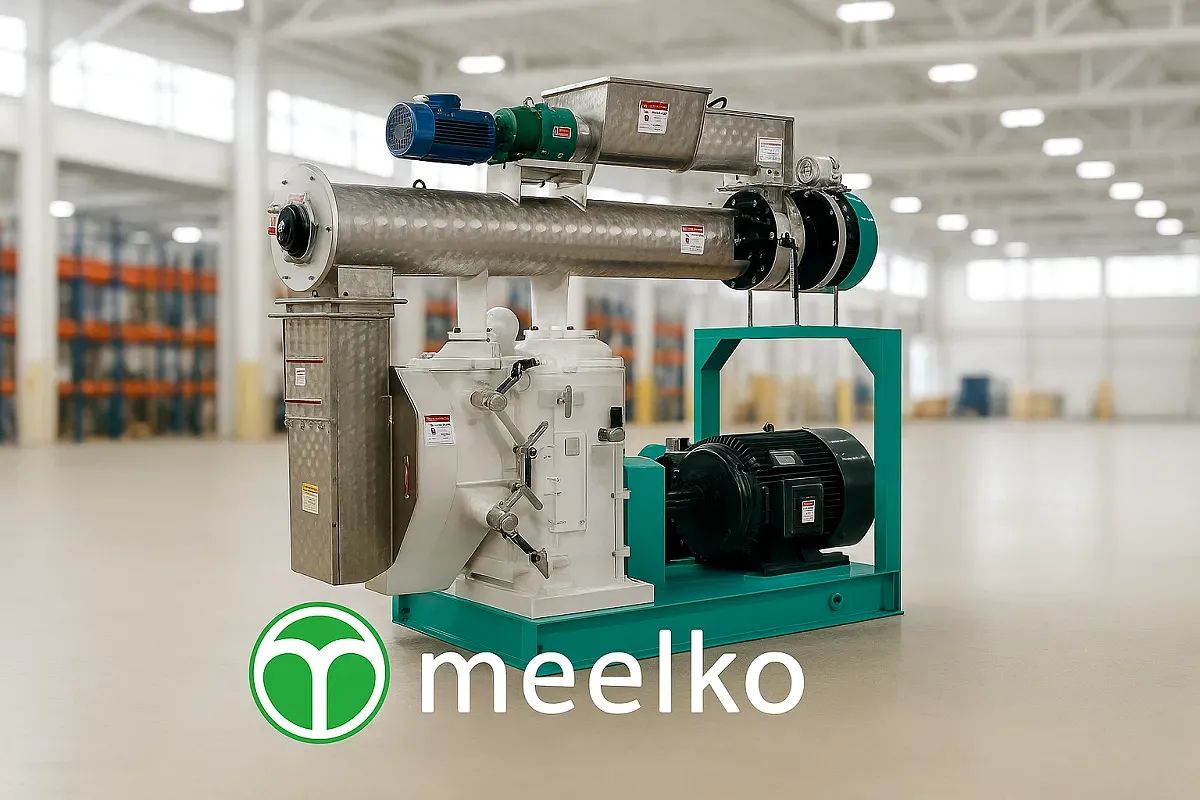
- Pelletising: a ring-die pellet mill compresses material through die holes at pressures of 100–250 MPa. Die L/D ratios of 8:1 to 10:1 are typical for alfalfa.
- Cooling: a counter-flow cooler reduces pellet temperature to within 5 °C of ambient and moisture to 10–12 % for safe storage.
- Screening: vibrating screens separate fines, which are recirculated to the conditioner at rates of 5–10 % of total output.
Yield and Energy Benchmarks
A well-tuned alfalfa pellet line achieves 1.5–3.0 tonnes/hour per 100 kW of pellet-mill motor power. Grinding accounts for 25–35 % of total electrical energy in the process, making screen selection and hammer maintenance critical cost levers. Replacing worn hammers on schedule can improve grinding efficiency by 10–15 % and reduce downstream energy use in the pellet press.
Quality Indicators for Alfalfa Pellets
- Pellet Durability Index (PDI): ≥ 95 % for export-grade product.
- Bulk density: 600–700 kg/m³.
- Crude protein: 15–22 % depending on harvest stage.
- Moisture: 10–12 % at dispatch.
- Fines (< 3 mm): < 5 % at point of sale.
Choose Meelko Grinding and Pelletising Equipment
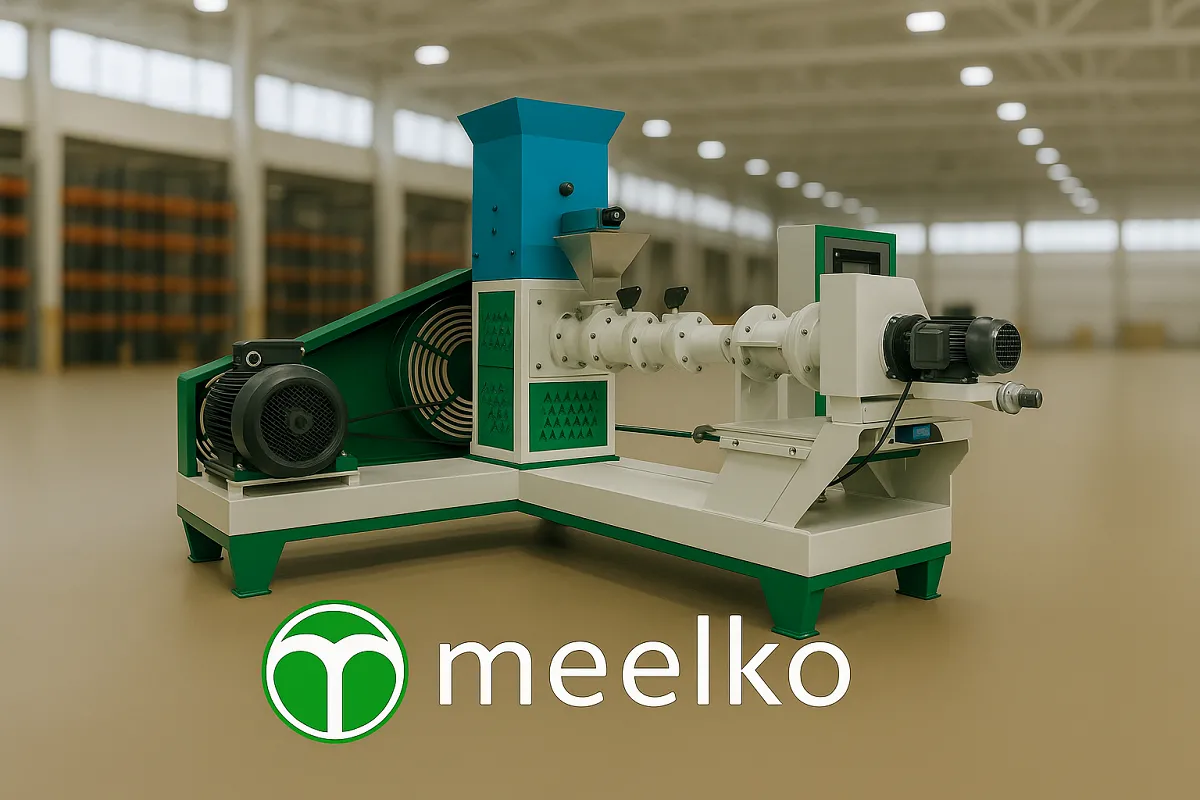
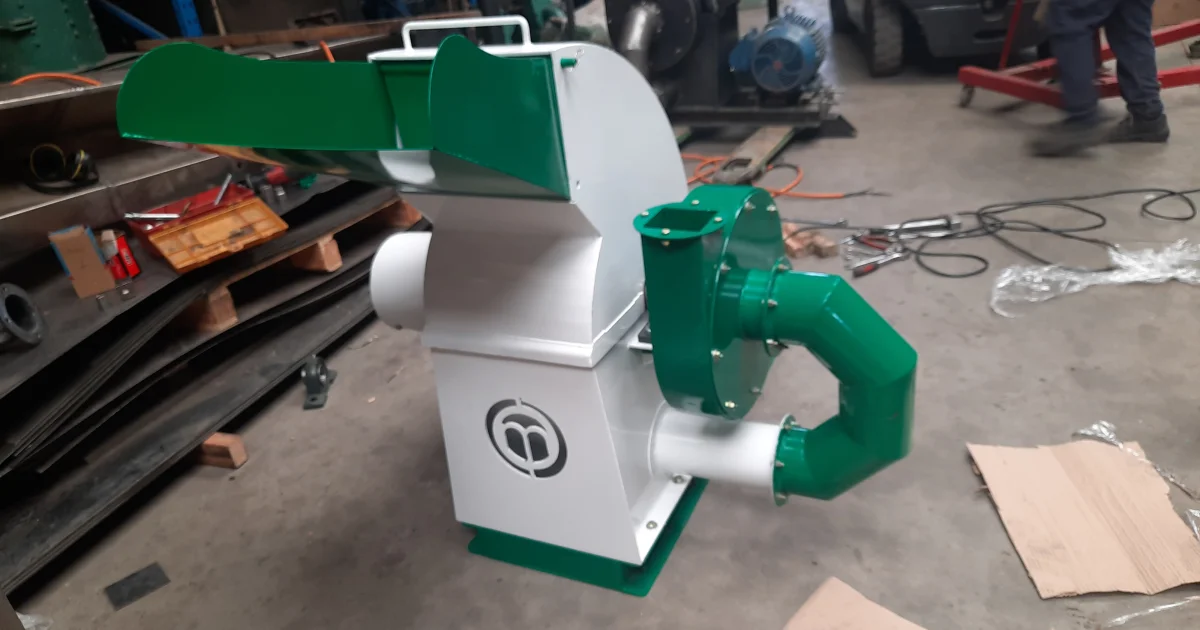
Meelko offers a complete range of hammer mills, pellet presses, coolers, and screening systems designed for alfalfa and other forage crops. Our engineers help you select the right screen size, motor power, and line configuration to match your production goals—whether you are processing 1 tonne or 15 tonnes per hour. Contact Meelko today and take the first step toward a high-performance alfalfa pellet operation.