The Growing Market for Wood Pellets
The global wood pellet market has experienced remarkable growth, reaching an estimated 45 million tons per year and projected to surpass 60 million tons by 2030. Driven by demand for renewable heating solutions in Europe, North America, and Asia, sawdust wood pellets have become one of the most traded biomass commodities worldwide.
Setting up a sawdust wood pellet production plant represents a profitable investment opportunity for businesses with access to sawmill residues, furniture manufacturing waste, or forestry by-products. This guide covers every stage of the process from raw material reception to final packaging.
Understanding Your Raw Material: Sawdust
Not all sawdust is equal. The quality of your final pellet depends heavily on the characteristics of your raw material:
- Softwood sawdust (pine, spruce, fir) produces pellets with higher energy content — typically 4,700–4,900 kcal/kg — and lower ash content (under 0.5%).
- Hardwood sawdust (oak, beech, maple) yields denser pellets but with slightly higher ash content (0.5–1.5%).
- Mixed sawdust can be used but requires careful quality control to maintain consistent pellet properties.
The critical parameter is moisture content. Fresh sawdust from sawmills typically arrives at 40–60% moisture, while the pelletizing process requires material at 10–14% moisture. This gap makes the drying stage the most energy-intensive part of the entire production line.
The Complete Production Process
Stage 1: Raw Material Reception and Storage
Incoming sawdust is received via trucks and stored in covered silos or warehouses. Proper storage prevents rain contamination and allows for initial air drying. A walking floor or screw conveyor system moves material from storage to the production line. Storage capacity should cover 3–7 days of production to buffer against supply interruptions.
Stage 2: Screening and Pre-Cleaning
Raw sawdust passes through a vibrating screen to remove oversized particles, stones, metal debris, and contaminants. A magnetic separator removes ferrous metals that could damage downstream equipment. This stage protects the dryer and pellet mill from premature wear.
Stage 3: Drying
The drying stage reduces moisture from 40–60% down to 10–14%. Common dryer types include:
- Rotary drum dryers: Handle large volumes (1–10 tons/h), highly efficient, suitable for continuous production.
- Flash dryers (pneumatic): Faster drying cycle, smaller footprint, ideal for fine particles like sawdust.
- Belt dryers: Gentle drying at lower temperatures, suitable for heat-sensitive materials.
Energy for drying can come from burning bark, wood chips, or reject pellets, creating a self-sustaining energy loop that reduces operating costs by 30–40%.
Stage 4: Grinding (Size Reduction)
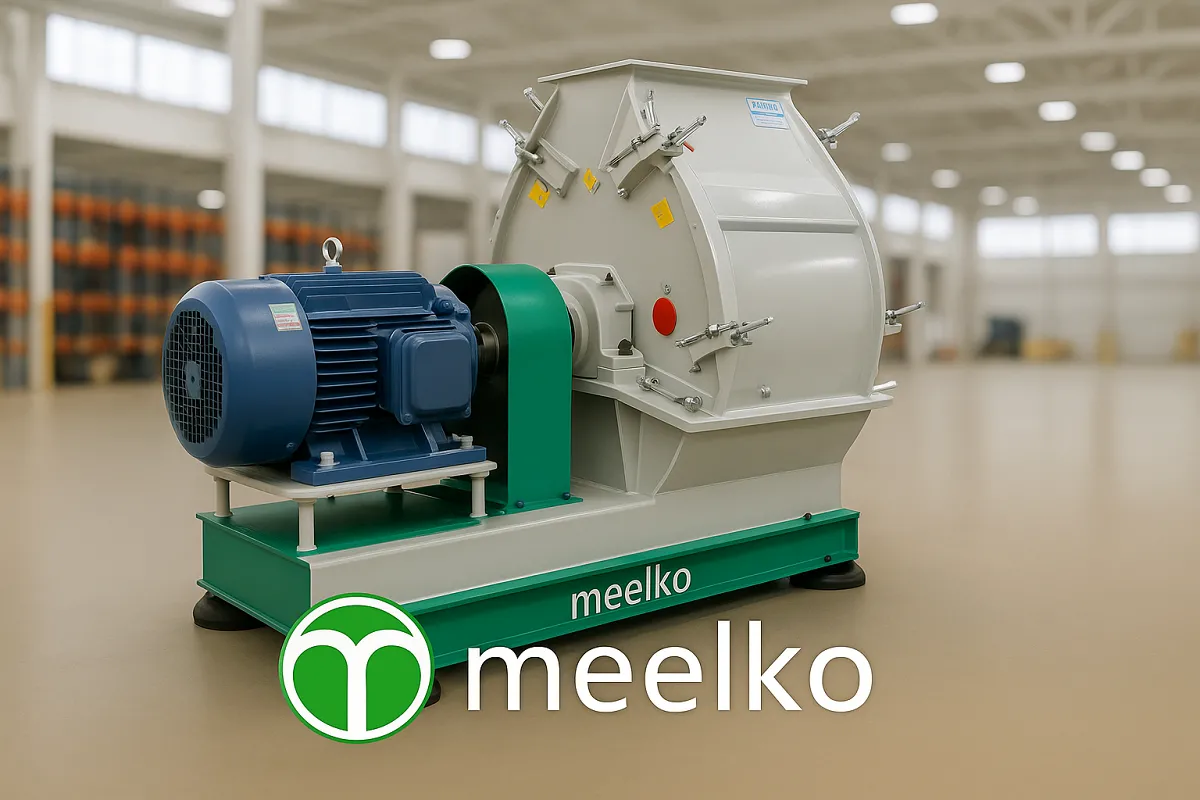
If the sawdust contains particles larger than 5 mm, it passes through a hammer mill to achieve uniform particle size. Optimal particle size for pelletizing is 2–4 mm. The hammer mill typically requires 15–45 kW depending on throughput.
Stage 5: Conditioning
Before entering the pellet mill, material passes through a conditioner where steam or water is added to reach optimal moisture (12–13%) and temperature (70–80°C). Proper conditioning improves pellet durability by 15–25% and reduces die wear.
Stage 6: Pelletizing
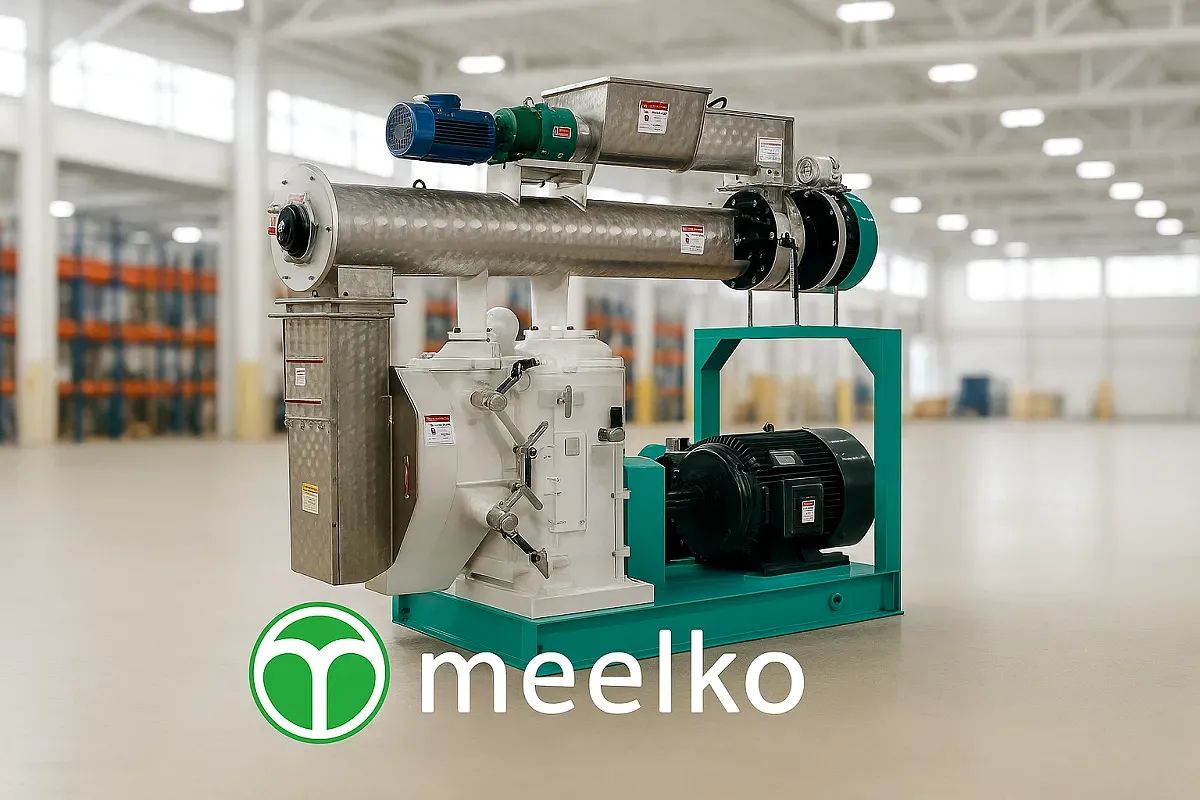
The conditioned material enters the pellet mill where it is compressed through a die under high pressure (150–300 MPa). The natural lignin in wood acts as a binding agent when heated, eliminating the need for artificial binders. Die hole diameter is typically 6 mm or 8 mm for standard wood pellets.
Stage 7: Cooling
Pellets exit the mill at 80–90°C and must be cooled to within 5°C of ambient temperature. A counterflow cooler is the industry standard, using ambient air drawn upward through a column of descending pellets. Cooling time is approximately 10–15 minutes.
Stage 8: Screening and Fines Recovery
Cooled pellets pass through a vibrating screen to separate fines and broken pellets. Fines are recycled back to the pellet mill, typically representing 5–10% of production. This recycling improves overall yield and reduces waste.
Stage 9: Packaging and Storage
Finished pellets are packaged in 15 kg retail bags, 1-ton big bags, or stored in bulk silos for truck or rail delivery. Automated bagging systems can process 200–600 bags per hour.
Equipment List for a 1 Ton/Hour Plant
- Storage silo with extraction system
- Vibrating screen and magnetic separator
- Rotary or flash dryer with heat source
- Hammer mill (if needed)
- Conditioner with steam generator
- Ring die pellet mill (1–1.5 ton/h capacity)
- Counterflow cooler
- Vibrating screen for fines separation
- Bagging machine and conveyor systems
- Dust collection and fire suppression systems
ENplus Certification
To access premium European markets, wood pellets must meet ENplus A1 standards: ash content ≤0.7%, moisture ≤10%, mechanical durability ≥97.5%, and net calorific value ≥4,600 kcal/kg. Certification requires regular third-party audits and traceability systems.
Profitability Overview
A well-managed 1 ton/h plant operating 7,000 hours/year produces approximately 7,000 tons annually. With production costs of $80–120/ton and market prices of $150–250/ton depending on region and certification, annual gross margins range from $200,000 to $900,000. Return on investment is typically achieved within 2–4 years.
Partner with Meelko for Your Wood Pellet Plant
Meelko provides complete turnkey wood pellet production lines from 500 kg/h to 10 ton/h capacity. Our engineering team designs customized layouts, selects equipment, and provides installation support and operator training. Contact us to discuss your project requirements and receive a detailed proposal.