Short answer: the same output can cost very differently depending on design decisions. At 150 kg/h, a mash plant starts at about USD 7,700 in machines and a pellet plant at USD 12,665. And at about 700 kg/h, moving from a flat die to a ring die makes the pellet mill four times as expensive. Below are the main variations and when each one makes sense.
By product: mash, pellet or extruded
Mash feed
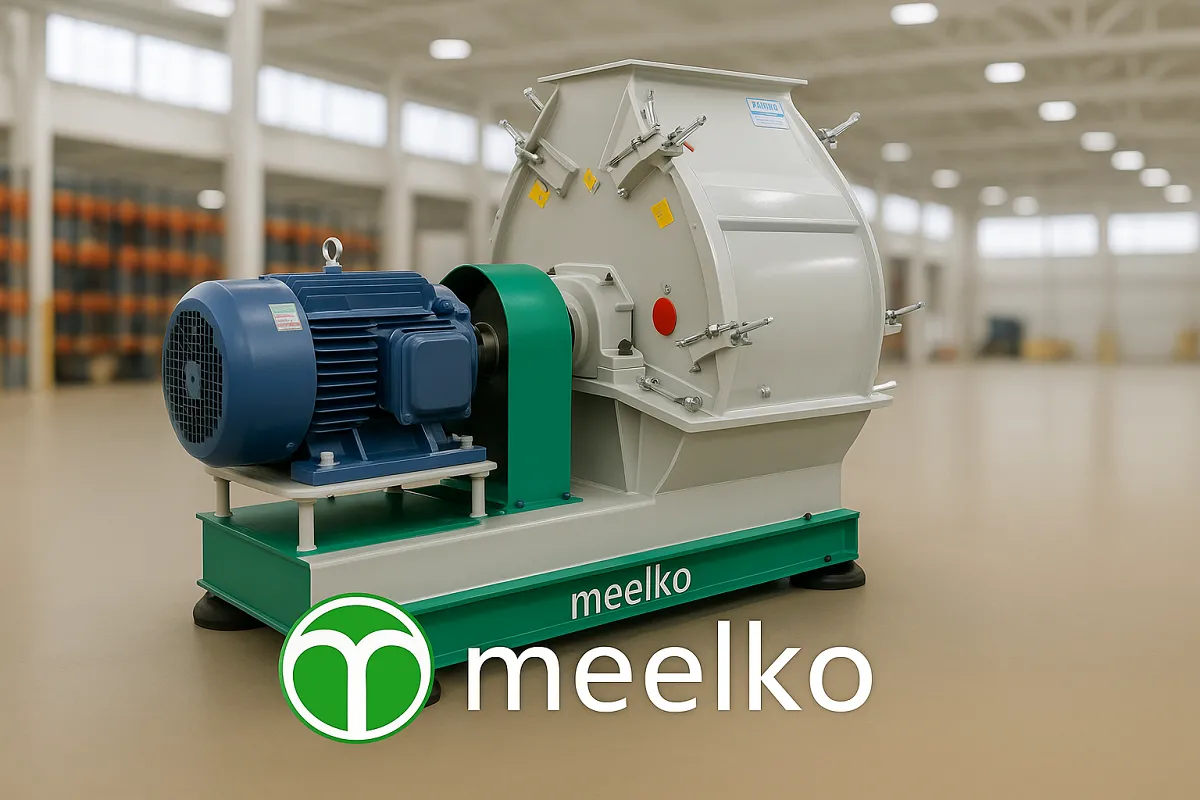
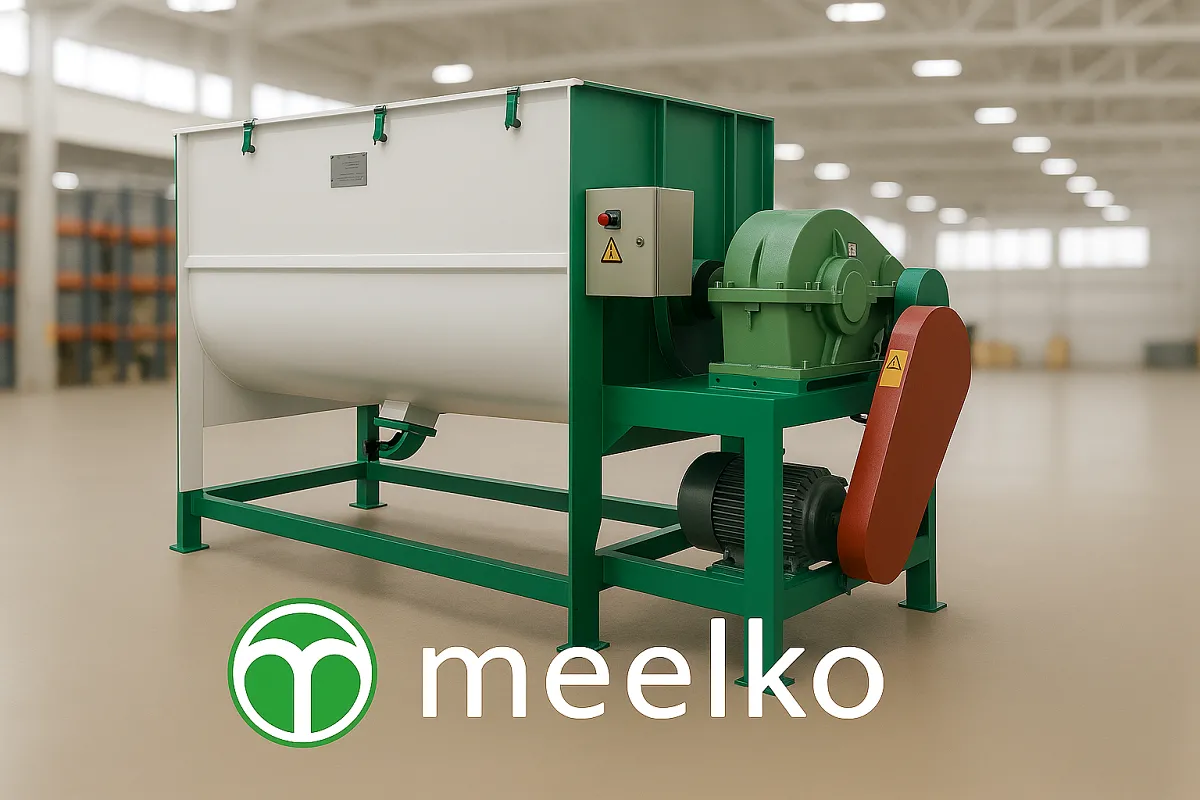
It only grinds and mixes: it is the simplest plant. It works for your own use in cattle, pigs and poultry with simple formulas. At 150 kg/h, with an MKH198B hammer mill, a mixer and a screw conveyor: USD 7,723 in machines. At 500 kg/h, with an MKH500C hammer mill and a 500 kg/h mixer: USD 17,725. Its limit is that ingredients can separate and animals can select.
Pellet feed
This adds a pellet mill, cooler and screen. It is the usual format for selling feed: it ships well, wastes less and every bite carries the complete formula. We cover this in happy hens and quality eggs. See how the total changes in what a plant takes and what it costs.
Extruded feed
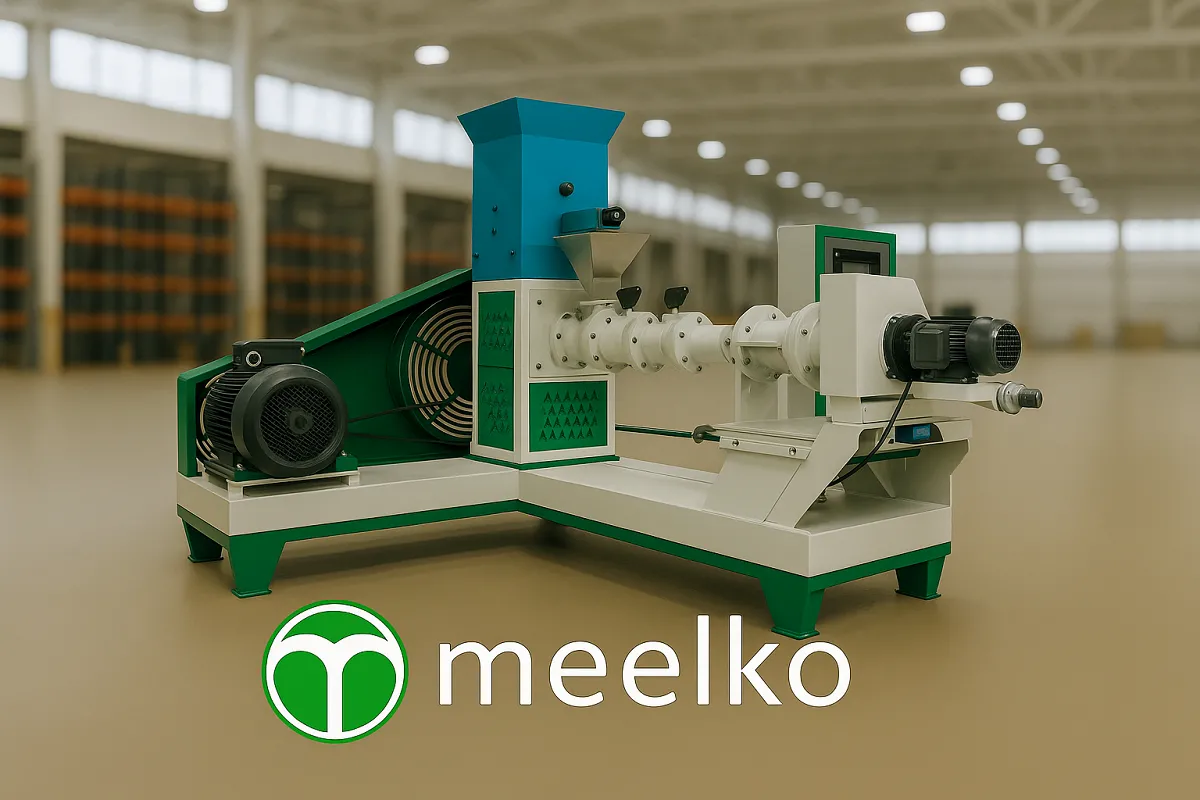
The extruder cooks the feed with pressure and temperature. It is what you need for dog and cat kibble and floating fish feed. It adds drying, coating and tighter control: it is another plant, with another product and another sale price. See kibble factory and fish feed.
By pellet mill: flat or ring die
- Flat die. The 360 mm pellet mill gives 680 to 820 kg/h, with 22 kW, for USD 9,393. Simple and cheap, good for starting out and for single-shift production.
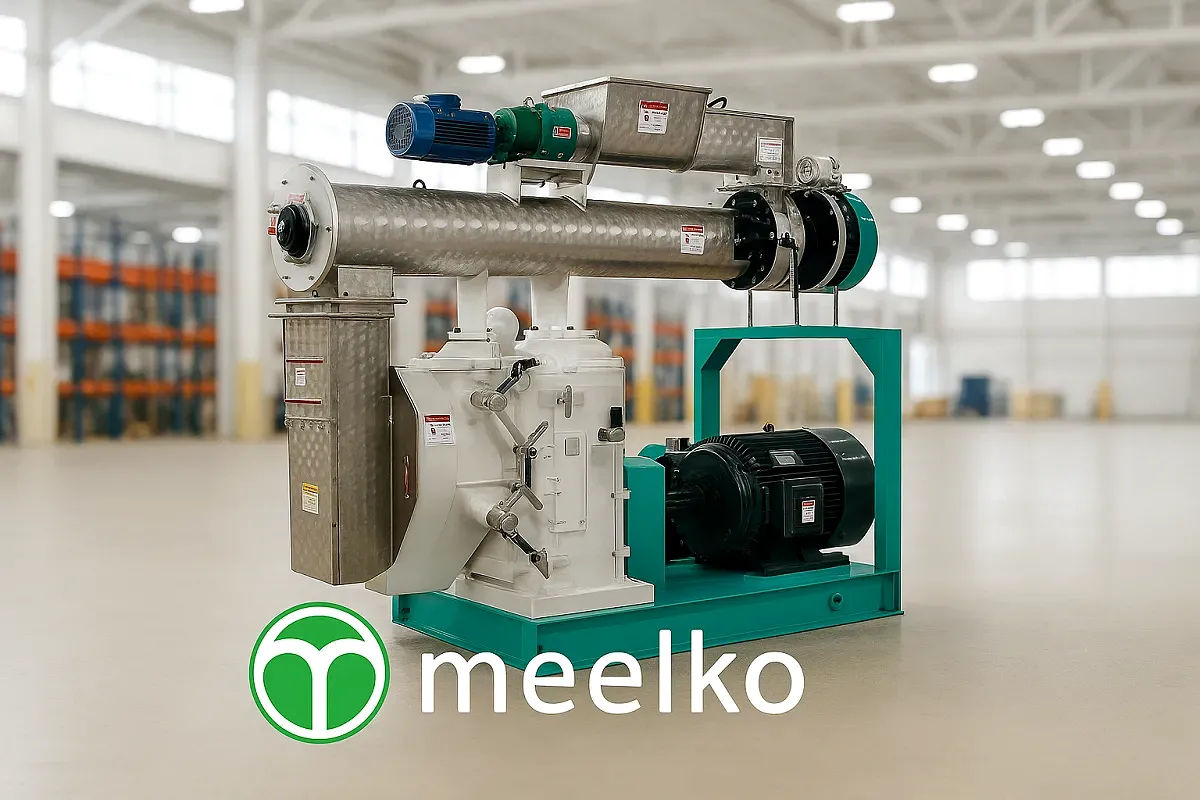
- Ring die. The MKRD350C gives 500 to 700 kg/h, with 50 kW, for USD 42,000. Built for continuous production, with a more uniform pellet and less wear per ton, but it needs a steam conditioner, cooler and a larger installation.
If you sell feed in volume all year, a ring die is justified. For your own use or to start out, almost never. See also the pellet mill comparison.
By energy: grid, tractor or diesel
- Three-phase grid. The norm, and the cheapest per ton if the grid is enough. See how much power it needs.
- Tractor. The MKFD230P PTO mill gives 300 kg/h for USD 3,853. It works on the farm, but ties up the tractor. See PTO or electric.
- Diesel. Hammer mills such as the MKH420A (USD 5,165) run without the grid. Energy costs more per ton.
By level of automation
- Manual. Weighing and loading by hand, with simple push buttons. It is the cheapest and works for few tons, but depends on the operator: one weighing error ruins a batch.
- Semi-automatic. Conveyors and interlocks between machines, level sensors and a scale for large ingredients. This is the most common balance point.
- Automatic. Recipe-based dosing with a PLC and a record of each batch. More investment in panels and electromechanical systems, less staff and more traceability, which some customers and standards require.
By raw material and formula
- With a premix or from scratch. Buying a ready-made vitamin and mineral premix simplifies dosing. Dosing each micro-ingredient takes more equipment and more control.
- With whole or ground grain. If you buy meals, you can skip the hammer mill, although you lose control over cost and particle size.
- With liquids. Molasses and oil call for tanks, pumps and dosing.
- With forage. To include alfalfa or fiber in quantity, grinding and pelleting change. See alfalfa pellets.
By delivery: bags or bulk
Selling in 25 or 40 kg bags takes a bagger and storage, but opens up shops and small producers. Selling in bulk needs product silos and truck loading, and suits large customers. Many plants do both.
How to choose
- For whom? For your own use, think simple. To sell, think consistent quality and records.
- How many tons per month and how many shifts? This defines almost everything. Start with the line sizing tool.
- What energy is on site?
- How much can you invest and how will you grow? You can start with few machines and leave room in the building and panel to expand.
Conclusion
There is no ideal plant: there is the one that fits your product, your scale and your energy. Meelko, an American brand of agro-industrial machinery, offers pellet mills, industrial ring die machines, hammer mills, mixers and extruders to build each variation. Tell us what you want to produce and for whom, and we will recommend the configuration.