Short answer: in dry extrusion the mix is cooked only by the friction and pressure of the screw, with a little added water; no boiler is needed. In wet extrusion the mix first goes through a conditioner where steam and water are added, which requires a boiler. Dry extrusion is simpler and cheaper to install and is enough for most kibble and fish feed in a small or medium operation. Wet extrusion pays off with high volume, recipes with more fat or fresh ingredients, and tighter density control. Full explanation and how to choose below.
What extruded food is
Extruding means pushing a flour mix with a screw through a barrel, where it heats up by friction and pressure, and forcing it out through the holes of a die. On exit, pressure drops suddenly, water flashes off and the product expands: that is how kibble, floating fish feed, puffed snacks and heat-treated soybean are made. The heat cooks the starch (making it digestible) and also reduces the microbial load. A knife at the die cuts the product to length.
For an overview of the technology, see food extrusion technology.
Dry extrusion: how it works
The flour enters the barrel with a little water and the screw does all the work: friction raises the temperature and cooks the mix in seconds. No steam, no boiler.
- Advantages: simple installation, fewer machines, lower investment, less skilled staff. Quick start and stop, good for batch production.
- Limits: all cooking energy comes from the motor, so it uses more kWh per ton and the screw and die wear faster. It accepts less fat and fewer fresh ingredients in the recipe.
- Typical uses: dog and cat kibble, fish and poultry feed in small or medium plants, and full-fat soybean treated for animal feed.
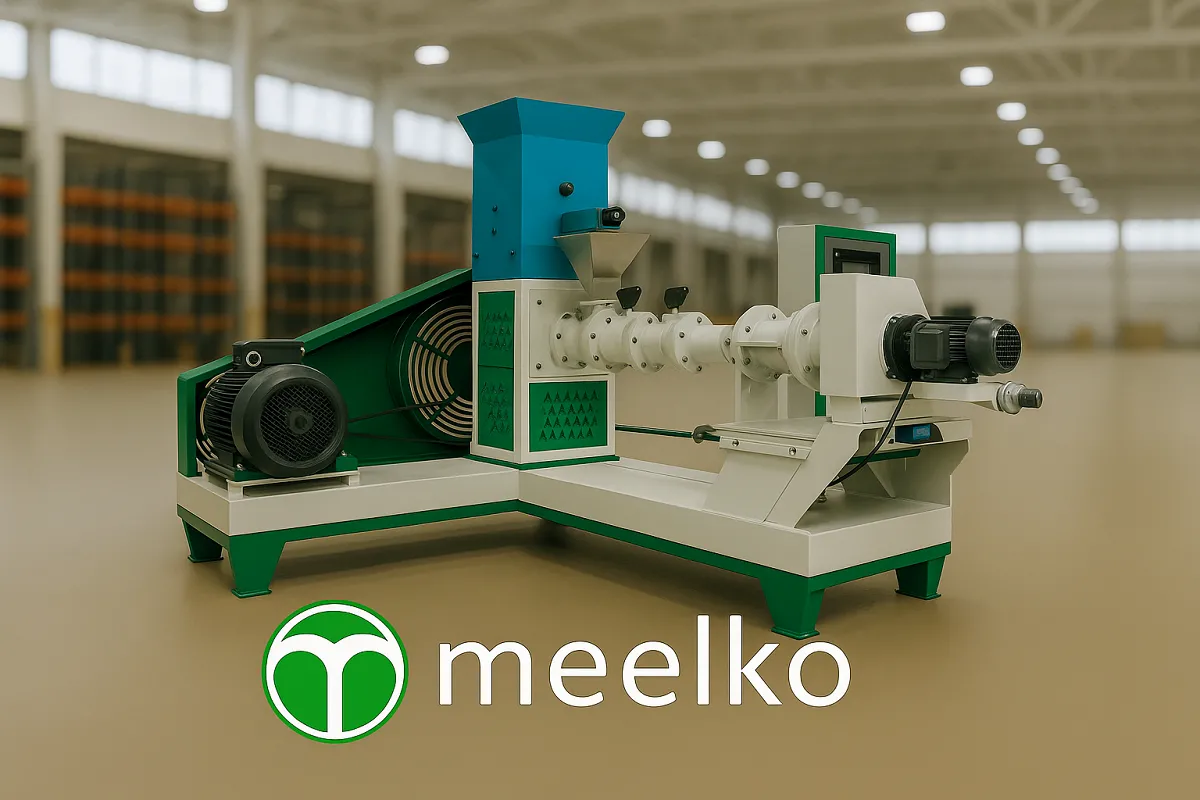
Meelko's MKED series is dry extrusion: the MKED080B, for example, runs without a steam boiler, with 22 kW and 200 to 250 kg/h.
Wet extrusion: how it works
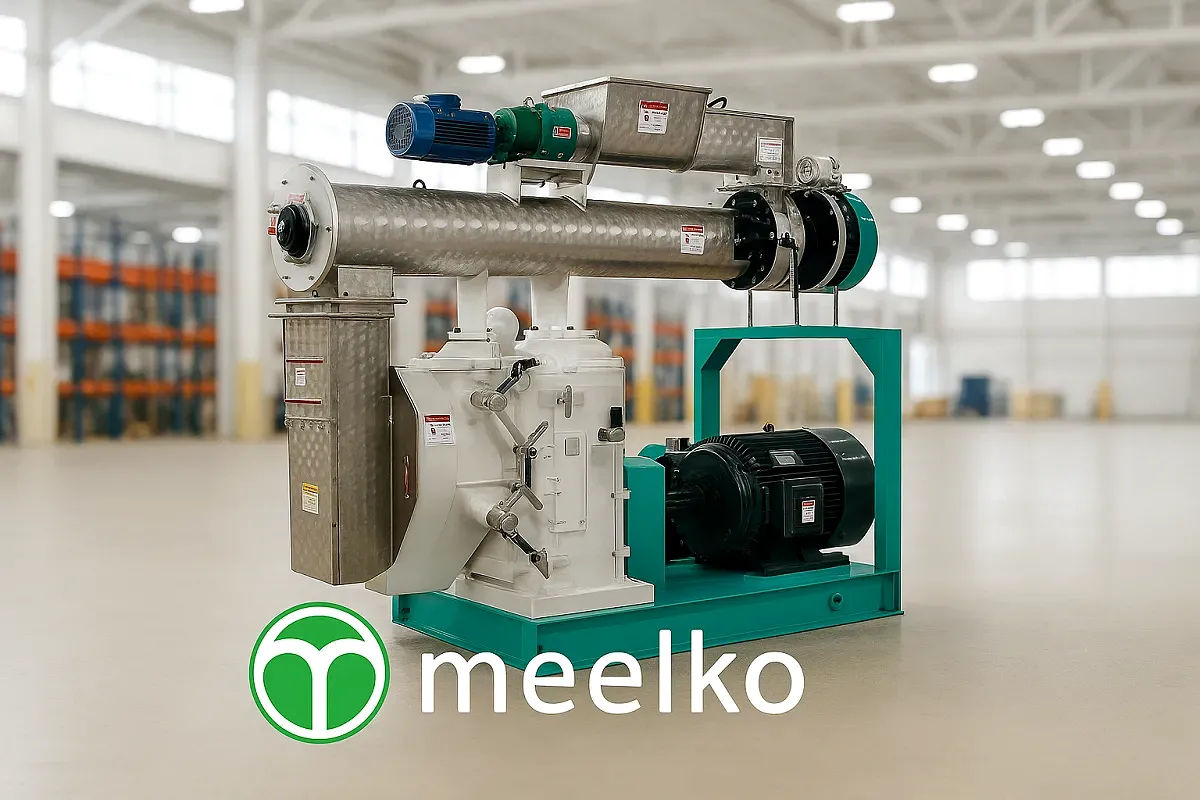
Before the screw there is a conditioner: a paddle vessel where the flour receives steam and water for a while. The mix enters the barrel already hot and moist, with the starch beginning to cook.
- Advantages: since steam supplies part of the heat, the motor yields more kilos per kW. Cooking is more even, recipes can include more fat or fresh meat, and density, which decides whether fish feed floats or sinks, is easier to control.
- Limits: it needs a boiler, a steam line, boiler water treatment and staff to run it. The product leaves wetter, so a dryer is mandatory. The initial investment is considerably higher.
- Typical uses: pet food or fish feed plants of several tons per hour and premium products.
What about "high moisture extrusion"?
That is something else. The term refers to a process for making plant-based meat with a fibrous texture from soy or pea protein: it uses much more water, twin-screw extruders and a long cooled die, and the product does not expand. It is not the process for kibble or animal feed.
Quick comparison
- Boiler: dry, no; wet, yes.
- Investment: dry, lower; wet, higher (boiler, conditioner, larger dryer).
- Kilos per kW: dry, fewer; wet, more.
- Recipes with fat or fresh ingredients: dry, limited; wet, more flexible.
- Floating and density control: dry, fine for standard products; wet, finer.
- Usual scale: dry, from tens to a few hundred kilos per hour; wet, from a few hundred kilos to several tons per hour.
Which one fits your project
Small or medium business: dry
If you will produce under about 300 kg/h, have no boiler and want to start with the lowest investment, dry extrusion is the logical choice. MKED models range from the MKED040C (30 to 40 kg/h, 5.5 kW, USD 7,056) and the MKED060C (120 to 150 kg/h, 15 kW, USD 8,297) to the MKED090B (300 to 350 kg/h, 37 kW, USD 28,646). What each size can handle is covered in small extruder from 30 to 150 kg/h.
Large plant: consider wet
From a few hundred kilos per hour, with long shifts or premium products, it is worth comparing. The MKEW series states more capacity at the same power: the MKEW080B gives 320 to 400 kg/h with 22 kW (USD 23,217), against 200 to 250 kg/h for the MKED080B, and the range goes up to the MKEW200B, 3,000 to 4,000 kg/h. The large models include feeding and conditioning systems. If your product needs a steam line, we define it in the quote.
Fish feed
For floating feed on a small or medium fish farm, dry extrusion works well. If you will sell fish feed in volume or need pellets that sink at a precise rate, wet extrusion gives more control. See fish feed machine.
A worked example
A business wants to sell 5 tons of kibble per month. Over 20 working days that is 250 kg a day: a 60 to 80 kg/h extruder such as the MKED050C (USD 7,733) does it in about 4 hours a day, with no boiler. For 20 tons a month, about 1,000 kg a day, the MKED060C handles it in one shift. Only when the plan goes beyond several tons a day does adding a boiler and conditioner make sense. How to size the full line (mill, mixer, dryer, cooler) is in pet food extruder.
What you need in both cases
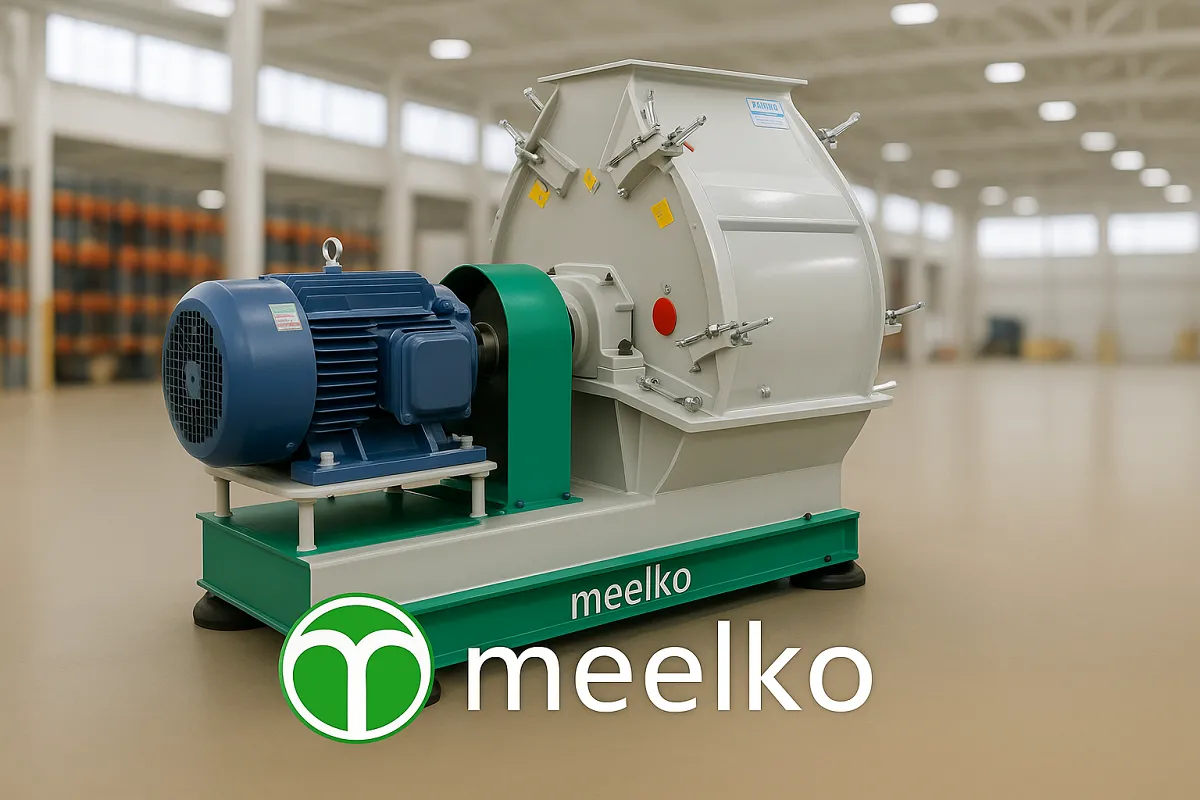
- Fine grinding before extrusion: the flour must be even and fine. See hammer mill for grain.
- A mixer so every kibble has the same composition.
- Drying and cooling before bagging, to prevent mold.
Conclusion
Dry extrusion is the entry point: no boiler, lower investment and enough for most small and medium projects. Wet extrusion is justified by high volume or premium products. Meelko, an American brand of agro-industrial machinery, offers extruders from 30 to 4,000 kg/h for kibble and fish feed. Tell us what you want to produce and how many tons per month, and we will recommend the process and model.