Why Invest in a Feed Production Line?
The global animal feed market exceeds $500 billion annually, driven by growing livestock and aquaculture industries. Setting up your own feed production line offers several strategic advantages: control over feed formulation and quality, reduced per-unit costs compared to purchasing commercial feed, ability to customize nutrition for specific animal needs, and the opportunity to sell excess production.
Components of a Complete Feed Production Line
1. Raw Material Reception and Storage
The process begins with receiving and storing raw materials such as corn, soybean meal, wheat bran, vitamins, and minerals. Proper storage prevents contamination and maintains ingredient quality. Essential equipment includes:
- Receiving hoppers and conveyors
- Storage silos (steel or concrete)
- Moisture monitoring systems
- Weigh scales for inventory management
2. Grinding/Milling
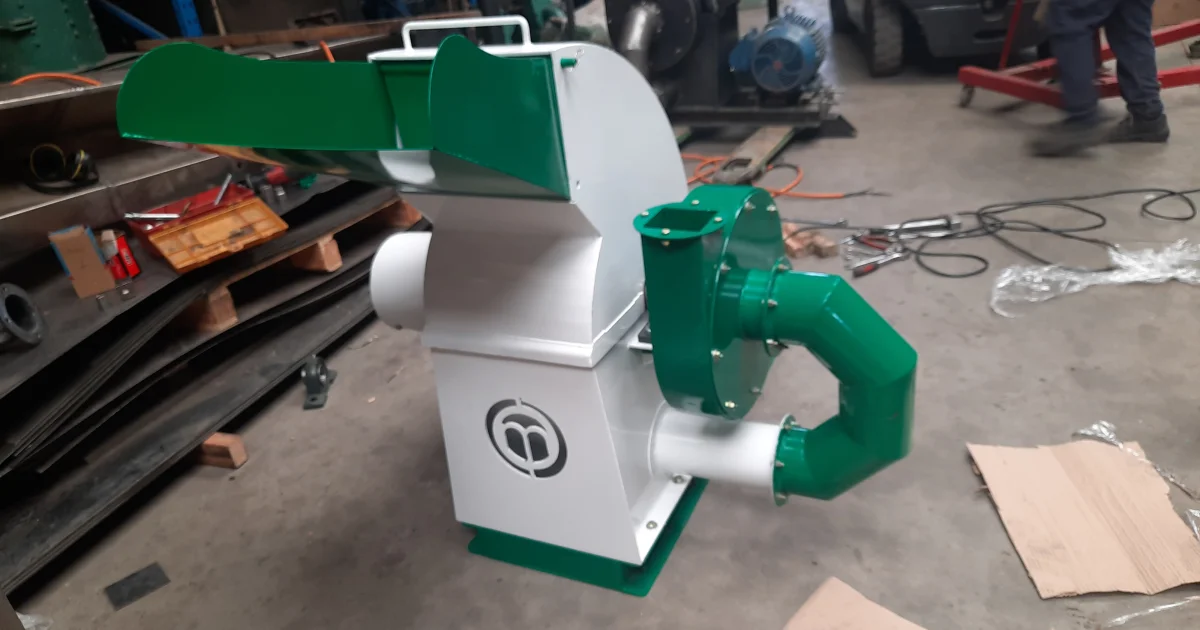
Raw materials must be ground to uniform particle sizes before mixing. Hammer mills are the standard choice, reducing grains to 0.5-3mm particles. Key considerations:
- Screen size selection based on target animal species
- Magnetic separators to remove metal contaminants
- Dust collection systems for worker safety
- Capacity matching with downstream equipment
3. Batching and Mixing
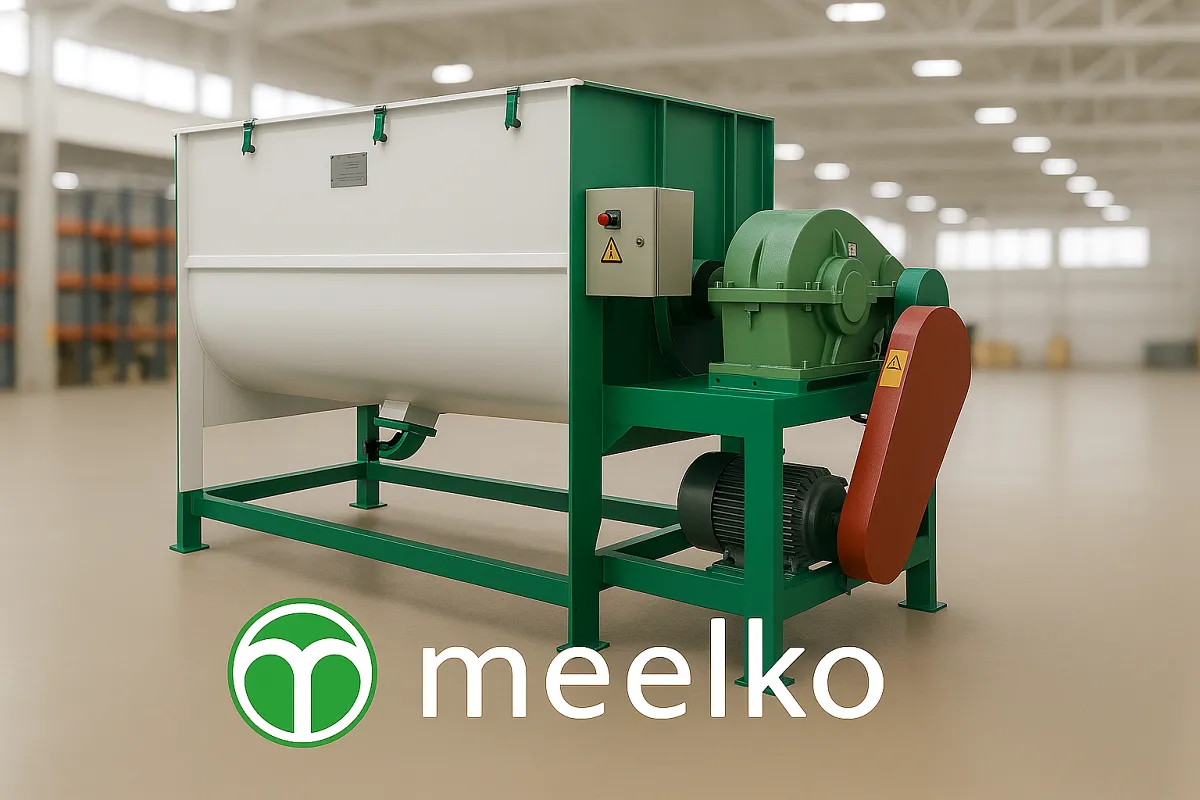
Precision batching ensures each feed formula contains the exact proportions of ingredients. A horizontal ribbon mixer or paddle mixer blends ingredients for 3-5 minutes to achieve uniformity. Micro-ingredient dosing systems handle vitamins, amino acids, and medications with accuracy to 0.01%.
4. Conditioning
Before pelletizing, the mixed feed passes through a conditioner that adds steam and/or water. Conditioning at 70-85°C for 30-60 seconds gelatinizes starches, denatures proteins, and kills bacteria, improving both pellet quality and nutritional availability.
5. Pelletizing
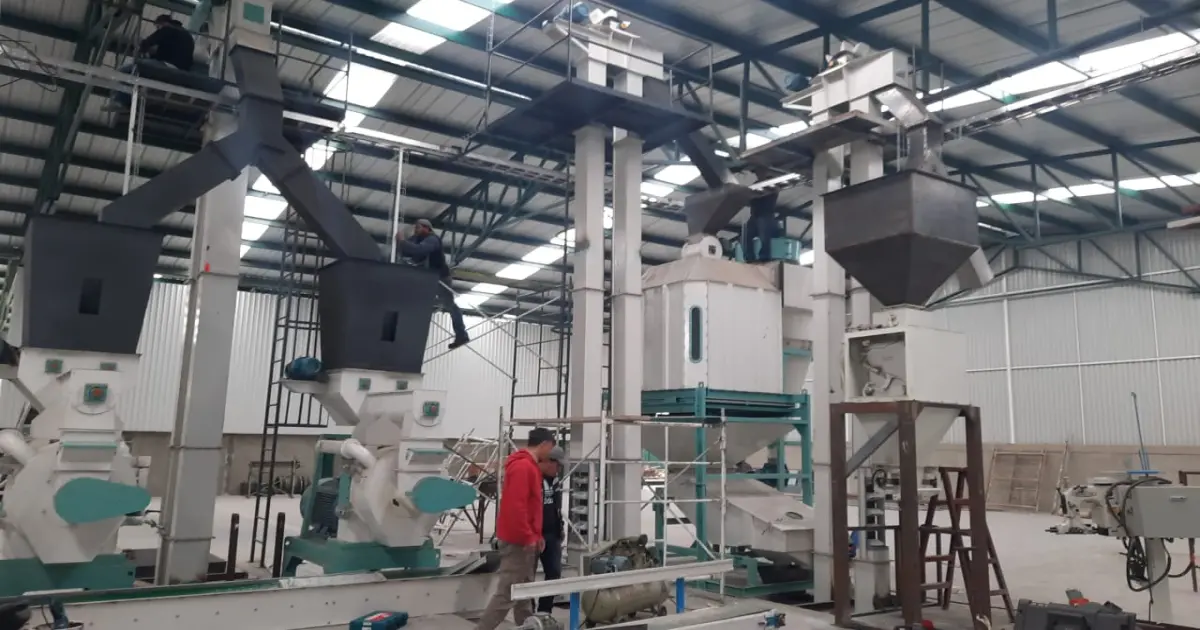
The conditioned mash enters the pellet mill where it is compressed through a ring die to form pellets. This is the heart of the production line. Key parameters include:
- Die specification (hole diameter, thickness, relief)
- Roller adjustment for optimal compression
- Production rate: typically 1-20 tons/hour
- Pellet durability index (PDI) above 95% for quality feed
6. Cooling
Hot pellets (60-80°C) exit the pellet mill and must be cooled to within 5°C of ambient temperature. Counterflow coolers are the industry standard, using ambient air drawn upward through falling pellets. Proper cooling prevents moisture migration and mold growth during storage.
7. Screening and Packaging
Cooled pellets pass through vibrating screens that separate fines (undersized particles) for reprocessing. Finished pellets are conveyed to packaging equipment or bulk storage bins. Options include:
- Automatic bagging machines (25-50 kg bags)
- Bulk loading systems for truck or rail transport
- Bag sealing and labeling equipment
Capacity Planning
Feed production lines are available in various capacities:
- Small scale (1-3 ton/hour): Suitable for individual farms or small cooperatives
- Medium scale (5-10 ton/hour): For regional feed companies and large farms
- Large scale (15-30+ ton/hour): For major feed manufacturers and integrators
Quality Control
A robust quality control program includes testing raw materials upon receipt, monitoring moisture and temperature throughout the process, testing finished pellets for durability and nutrient content, and maintaining detailed batch records for traceability.
Conclusion
Designing a complete animal feed production line requires careful consideration of capacity, species-specific requirements, automation level, and budget. Meelko offers turnkey feed production solutions from small farm units to large industrial lines, including equipment selection, layout design, installation, and operator training. Our team of engineers works with you from concept to commissioning.