Why pet food is an extrusion business
Dry dog and cat food, and floating fish feed, are not made with a pellet mill: they are made with an extruder. The difference is in the process. Extrusion cooks the mix with heat, moisture and pressure inside a screw barrel, gelatinizes the starch, sterilizes the product and, as it leaves the die, expands it into light, digestible kibble. The result is a feed that keeps for months, floats if designed for fish and can take whatever shape, size and texture the market asks for.
That flexibility is what makes pet food one of the fastest-growing segments in regional agro-industry. It is also what causes many lines to be sized wrong: the extruder is bought on price and the owner finds out late that the rest of the line cannot keep up, or that nominal capacity does not translate into sellable output. This guide explains how to size each stage.
Step 1: define the real output you need
Extruder capacity is expressed in kilograms per hour of finished product, but two things must be deducted. First, the drying loss: kibble leaves the extruder at 22% to 28% moisture and must come down to 8% or 10%, so every 100 kg extruded yields about 85 kg of dry product. Second, the real operating time: start-ups, formula changes and cleaning cut the day to 6 or 7 effective hours per 8-hour shift.
A concrete example: a company that wants to sell 20 tons a month of dog food, running one shift 22 days a month, needs to produce about 150 kg/h of dry product, which means an extruder of at least 180 kg/h nominal. Choosing the 120 kg/h model because it is cheaper forces a second shift from the very first month.
Step 2: choose the extruder
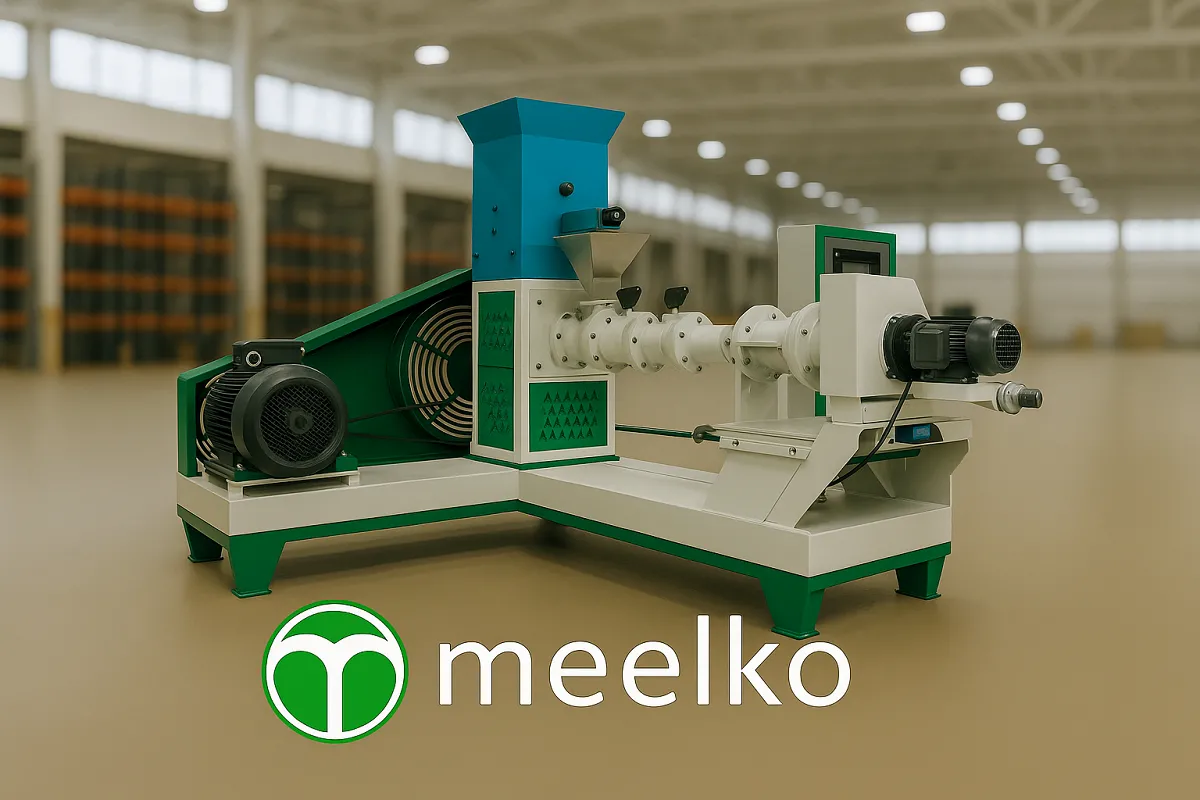
Meelko manufactures single screw extruders for dog and cat food, and high-capacity models for fish feed. The power and capacity references are:
- MKED040C: 30 to 40 kg/h with 5.5 kW. For start-ups, veterinary clinics and local brand producers beginning at small scale.
- MKED050C: 60 to 80 kg/h with 11 kW.
- MKED060C and MKEW060B: 120 to 180 kg/h with 15 kW. The most popular range for a first commercial plant.
- MKED070B and MKEW070B: 180 to 280 kg/h with 18.5 kW.
- MKED080B: 200 to 250 kg/h with 22 kW.
- MKED090B: 300 to 350 kg/h with 37 kW, for plants supplying regional distributors.
- MKED160B and MKED200B: 1,000 to 2,000 kg/h with 90 and 132 kW, designed for floating fish feed and large-scale pet food.
Reference prices for an extruder range from about USD 7,000 for the 30 to 40 kg/h model to USD 28,000 for the 300 to 350 kg/h unit, and USD 58,000 to 74,000 for the 1 to 2 tons per hour models. Two criteria beyond capacity: the screw type (single screw covers standard dog, cat and fish formulas; twin screw is justified for recipes high in fresh meat or fat) and the die change, which must be quick if you will produce kibble in several sizes for different breeds.
Step 3: the line around the extruder
The extruder is the core, but it represents 35% to 45% of the total investment. The rest of the line defines quality and production continuity.
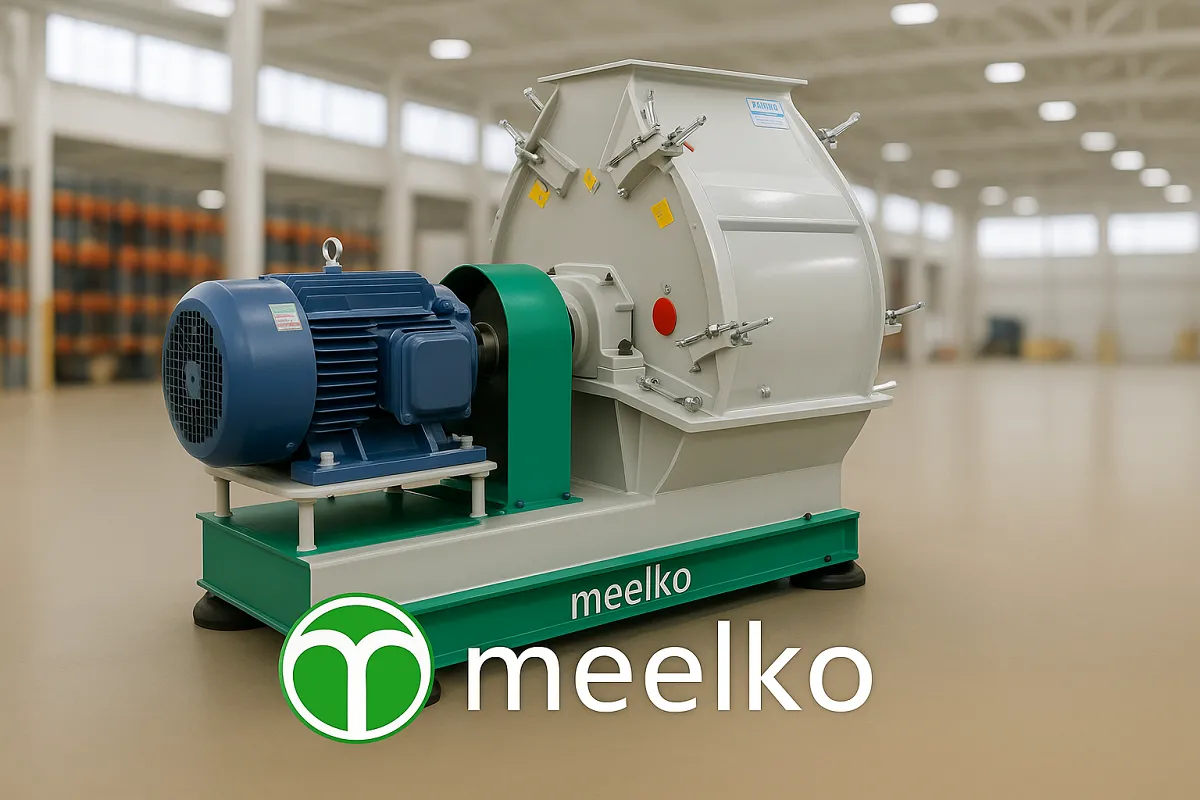
- Hammer mill: the mix must come in as a fine meal, with a 1 to 1.5 mm screen. Coarse grinding produces kibble with hard spots and uneven expansion. Size it with 30% more capacity than the extruder.
- Mixer: a pet food formula has 8 to 15 ingredients, with vitamin premixes in small doses. A ribbon horizontal mixer reaches homogeneity in 5 to 8 minutes; a 500 kg batch unit covers a 150 to 200 kg/h extruder.
- Conditioner: on models above 150 kg/h, steam injection before extrusion improves cooking and raises capacity by 15% to 25%.
- Dryer: the most frequently undersized stage. It must take the kibble from 25% to 9% moisture evenly, without scorching the surface. A 3-tier belt dryer covers a 150 to 250 kg/h extruder; for 30 to 80 kg/h a tray dryer is enough.
- Fat and flavor coater: a rotating drum that applies 3% to 8% liquid fat and powdered palatant. It is what makes the dog prefer your brand.
- Cooling, screening and packaging: kibble must be bagged below 30 degrees Celsius to avoid condensation inside the bag.
A complete 150 to 200 kg/h line with all this equipment sits between USD 35,000 and 55,000; a 30 to 40 kg/h line, conceived as a pilot or local brand plant, starts at USD 15,000.
Step 4: power, water and steam
Extrusion is energy intensive. A 150 to 200 kg/h line requires 45 to 60 kW installed across extruder, mill, mixer, dryer and peripherals, which means three-phase power is mandatory. Consumption is around 180 to 250 kWh per ton of finished product, with the dryer taking almost half. Lines with a conditioner also need a boiler or steam generator of 100 to 200 kg/h, and the mix uses 150 to 250 liters of water per ton.
Step 5: the formula and the raw material
No extruder fixes a bad formula. For the product to expand and cook properly, the mix needs a starch base (corn, rice, wheat), protein from meat, poultry, fish or soybean meal, and a controlled inlet moisture. Cat formulas carry more protein and less starch, so they expand less and need higher temperatures; floating fish feeds require maximum expansion and well-gelatinized starches. Before buying, it pays to test the real formula on an extruder of the same type: Meelko runs trials with the customer's raw material to adjust die, moisture and speed.
Conclusion
Sizing a pet food line means starting from the tons you will sell, arriving at the nominal extruder capacity that actually produces them, and backing it with fine grinding, homogeneous mixing, a properly sized dryer and coating. Meelko manufactures extruders for dog, cat and fish feed from 30 kg/h to 2 tons per hour, plus complete lines with mill, mixer, dryer and coater, shipped directly throughout the Americas. If you have your volume and your formula defined, contact us and we will propose the exact line.