Building Your First Fertilizer Production Line
Setting up a fertilizer production line doesn't have to be an overwhelming or overly complex endeavor. With the right equipment selection and a clear understanding of the process, small to medium enterprises can establish a functional line capable of producing 1 to 5 tons per hour of granulated fertilizer. The key lies in choosing equipment that matches your production goals, raw material characteristics, and budget constraints.
In this guide, we walk you through the essential steps to configure a simple yet effective fertilizer production line, focusing on the versatile 420 ring die granulator as the core machine, along with the supporting equipment needed for a complete operation.
Understanding Fertilizer Types
Before selecting equipment, it's important to understand the main fertilizer categories your line can produce:
Mineral Fertilizers
These include single-nutrient fertilizers like urea (46% N), superphosphate (16-20% P2O5), and potassium chloride (60% K2O). Mineral fertilizers typically require precise mixing and granulation to achieve uniform nutrient distribution. The global mineral fertilizer market exceeds $200 billion annually, with steady growth projected at 3-4% per year.
Organic Fertilizers
Derived from animal manure, compost, bone meal, or plant residues, organic fertilizers are experiencing rapid demand growth of 10-12% annually. They typically contain lower nutrient concentrations (2-5% NPK) but improve soil structure and microbial activity. Processing requires careful moisture management and sometimes fermentation pre-treatment.
NPK Compound Fertilizers
Blended fertilizers combining nitrogen, phosphorus, and potassium in specific ratios (e.g., 15-15-15, 20-10-10) command premium prices and represent the highest-value segment. Production requires accurate dosing and thorough mixing before granulation.
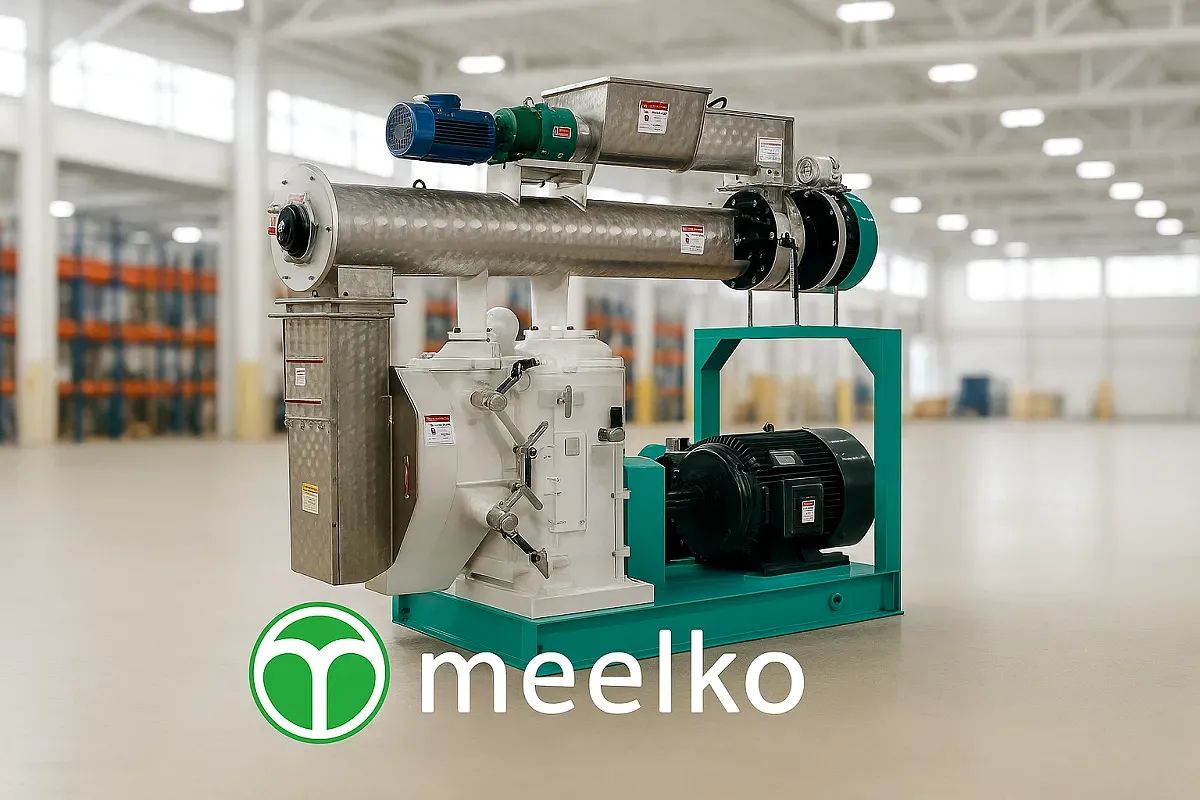
The 420 Ring Die Granulator: Core of Your Line
The 420 ring die machine is an excellent starting point for small to medium fertilizer operations. Key specifications include:
- Capacity: 1-3 tons/hour depending on material and die configuration
- Motor power: 30-55 kW
- Die diameter: 420 mm with customizable hole sizes (2-12 mm)
- Suitable materials: Organic waste, compound NPK blends, mineral mixtures
- Granule shape: Cylindrical, which can be rounded with an optional polishing drum
This machine is valued for its compact footprint, relatively low energy consumption per ton of output, and flexibility to handle different formulations by simply changing the die.
Step-by-Step: Configuring Your Production Line
Step 1: Raw Material Storage and Dosing
Begin with dedicated storage bins or silos for each raw material. For an NPK line, you'll need at least 3 separate bins with dosing systems. Volumetric feeders work for basic operations ($2,000-5,000 each), while gravimetric (loss-in-weight) feeders provide higher accuracy for premium products ($8,000-15,000 each).
Step 2: Mixing
A horizontal ribbon mixer or paddle mixer ensures homogeneous blending of raw materials. For 1-3 ton/hour lines, a mixer with 500-1,000 kg batch capacity and 3-5 minute mixing cycles is sufficient. Budget approximately $5,000-12,000 depending on capacity and material of construction.
Step 3: Granulation
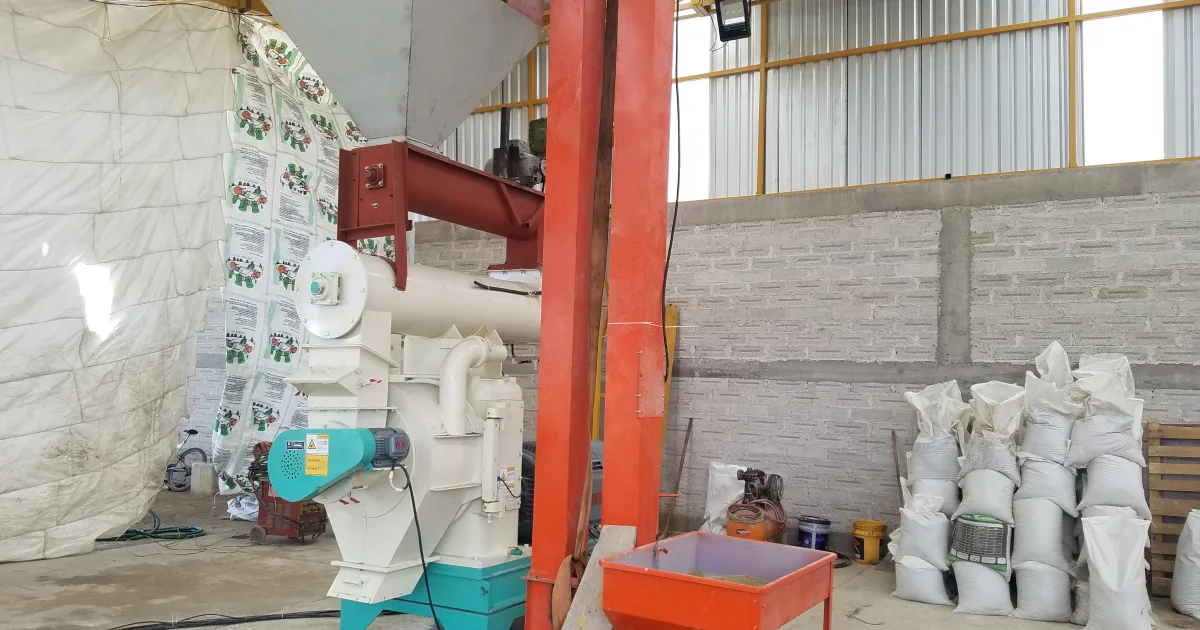
The 420 ring die granulator receives the mixed material and compresses it through the die to form granules. Moisture should be adjusted to 20-30% for organic materials or 2-5% for mineral blends before entering the granulator. This is the heart of your production line.
Step 4: Drying
A rotary drum dryer reduces granule moisture from 20-30% down to 5-10%. For small lines, a dryer with 1.2-1.5 m diameter and 8-12 m length handles 1-3 tons/hour effectively. Natural gas or biomass burners can provide heat, with fuel costs representing 30-40% of total operating costs.
Step 5: Cooling
After drying, granules exit at 60-80 degrees C and must be cooled to near ambient temperature. A rotary drum or counterflow cooler reduces temperature and further removes residual moisture. Cooling is critical for preventing caking during storage and packaging.
Step 6: Screening
A vibrating screen or rotary screener separates on-spec granules (typically 2-5 mm) from oversized and undersized particles. Oversized material goes to a crusher and returns to the granulator, while fines recycle directly. Typical screening efficiency is 85-95%, meaning most of your product meets specifications on the first pass.
Step 7: Packaging
An automatic bagging machine fills bags of 25-50 kg with weighed quantities. Semi-automatic systems cost $3,000-8,000, while fully automated lines with palletizing cost $15,000-40,000. For bulk sales, simple conveyor-to-truck loading may be sufficient initially.
Estimated Costs and Production Capacity
A complete simple fertilizer line produces approximately:
- 1 ton/hour line: Total equipment investment of $40,000-70,000
- 2-3 ton/hour line: Total equipment investment of $80,000-150,000
- 5 ton/hour line: Total equipment investment of $150,000-280,000
Operating costs typically range from $15-30 per ton of finished product (excluding raw materials), with energy representing the largest variable cost component.
Conclusion
Setting up a fertilizer production line is a profitable venture when properly planned. Starting with a simple configuration centered on a reliable granulator and essential supporting equipment allows you to enter the market with manageable investment and scale up as demand grows. Meelko offers complete fertilizer production equipment including granulators, mixers, dryers, and conveyors designed to work together seamlessly. Reach out to our team to configure the ideal line for your specific requirements and budget.