Short answer: a balanced feed plant takes much more than plugging in the machines. It needs electrical panels, electromechanical systems that coordinate the equipment, an internal electrical installation and matching contracted power. As a reference, a 150 kg/h plant has about 25 kW installed; a 500 kg/h one, about 60 kW; and a 1 t/h one, about 157 kW. Below is what each of these means and how much it adds to the budget.
The panel: the brain of the plant
The panel takes in the power and distributes it. It includes:
- Protections: so a fault in one motor does not damage it or take down the whole plant.
- Starters: a large motor draws far more when starting than when running. That is why soft starters or variable speed drives are used instead of direct starting.
- Controls and emergency stops: so the operator controls each machine and can stop the line immediately.
- Automation, depending on scale: from simple push buttons to a PLC with a screen and recipe-based dosing.
Electromechanical systems: what makes everything work together
A plant is not a set of separate machines: if one stops, the ones before it cannot keep pushing material. That is why you add:
- Interlocks. If a screw conveyor stops, whatever feeds it stops too, before it clogs.
- Level sensors in hoppers, so material neither runs out nor overflows.
- Variable speed feeders, which regulate how much material enters the pellet mill and protect it from overloads.
- Gates, valves and scales that direct and weigh the product.
- Suction and cyclones, which collect dust and return it to the process.
This is what most separates a plant that runs with two people from one that needs someone watching each machine.
How much power it needs
Installed power is the sum of the motors. But they do not all run at full load or at the same time. With a 75% load factor, as used by our power consumption tool, and a 380 V grid:
- 150 kg/h plant: about 25 kW installed, 20 kW to contract, about 33 A per phase.
- 500 kg/h plant: about 60 kW installed, 45 kW to contract, about 79 A per phase.
- 1 t/h plant: about 157 kW installed, 120 kW to contract, about 206 A per phase.
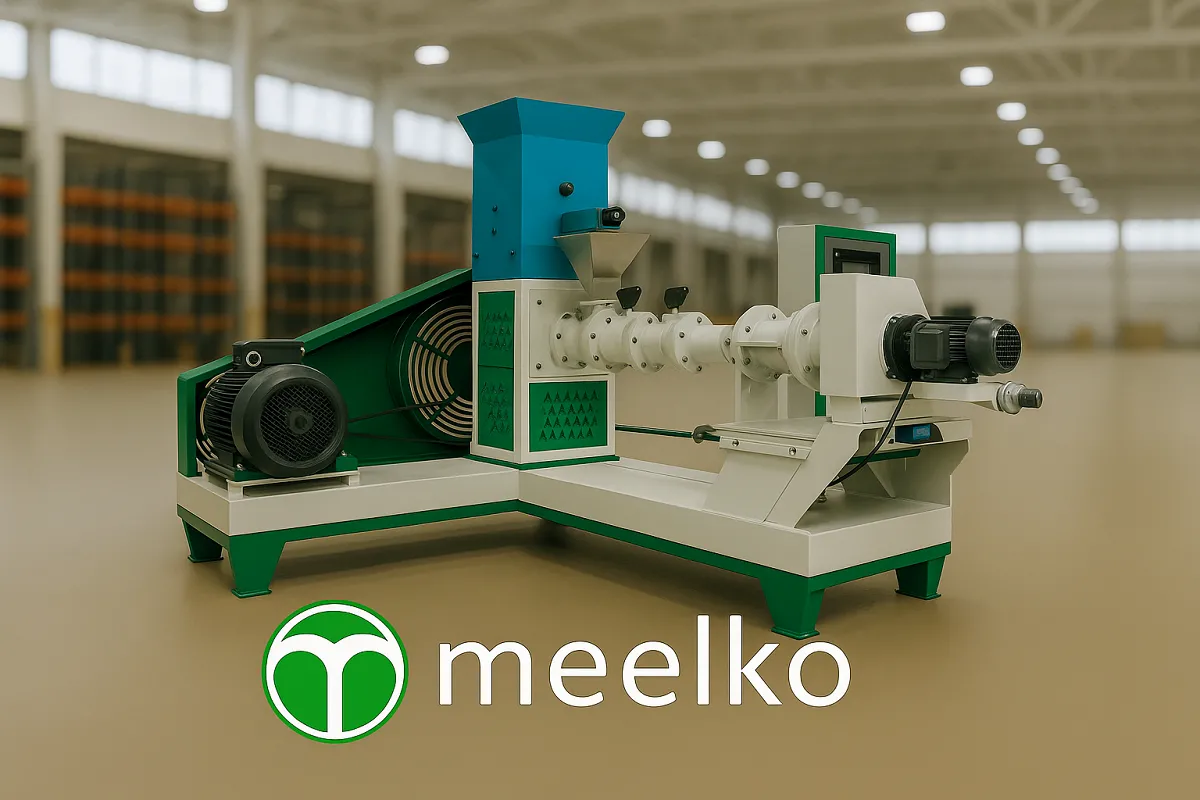
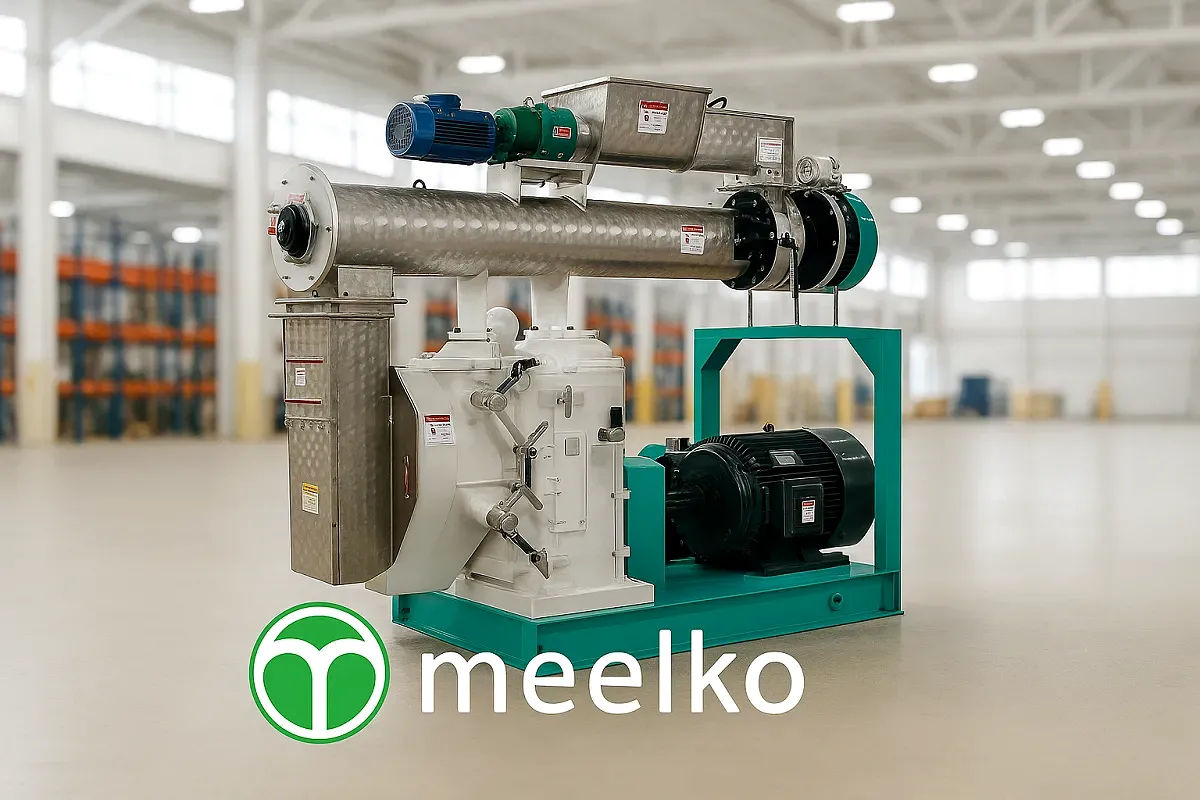
The main motors call the shots: in the 1 t/h plant, the MKRD420C ring die pellet mill has 90 kW, more than all the rest combined. And the complete line uses between 90 and 125 kWh per ton: at USD 0.12 per kWh, about USD 11 to USD 15 per ton. These numbers are rough: the real calculation depends on each project's equipment.
If your plant will use electric heating for drying or steam, add it to the calculation.
The grid connection: the first question
Before buying, ask the power company what capacity you can have at that location. There are three scenarios:
- The grid is enough. You contract the power and make the connection.
- The grid is not enough. Above a certain capacity you need your own transformer and a medium voltage line. It is usually a significant cost and a long lead time. Find out first: it can change the project's location.
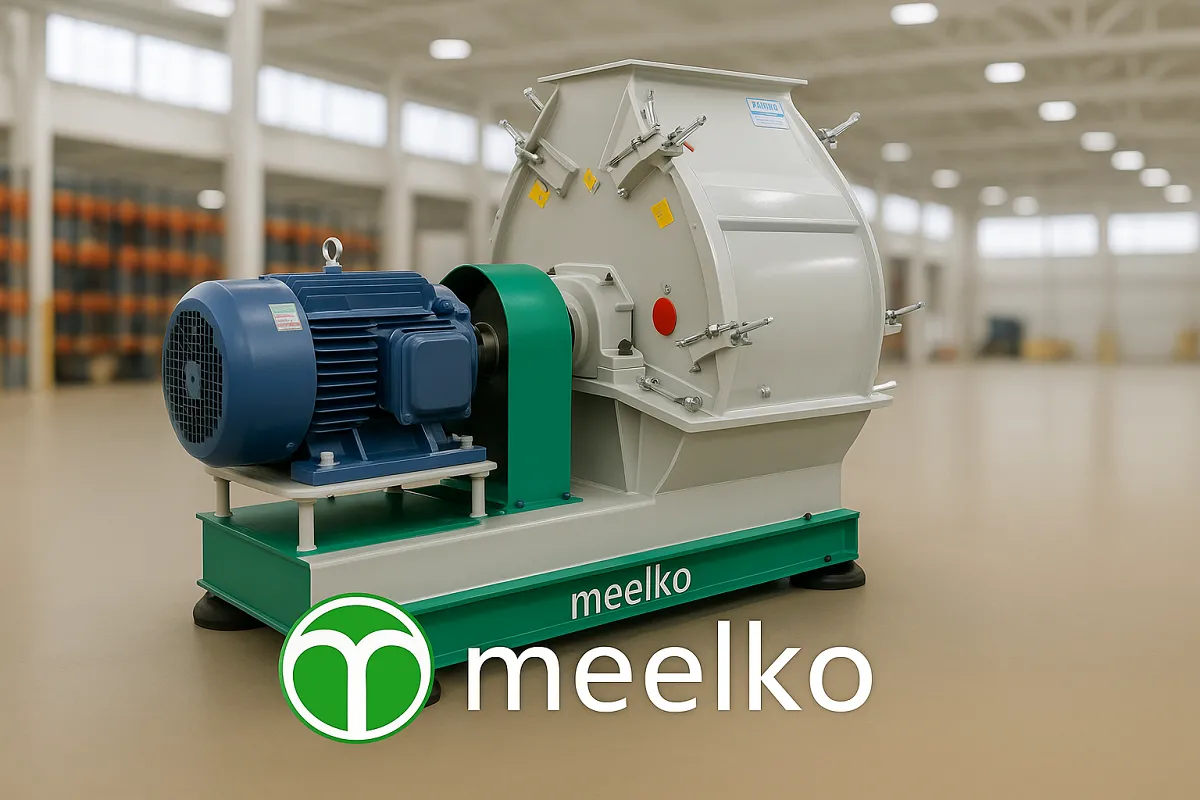
- There is no grid. You can run on a generator: about 26 kVA for the small plant, 63 kVA for the medium and 166 kVA for the 1 t/h. The medium plant would burn about 10.5 liters of diesel per hour, so energy costs quite a bit more. To start without the grid, there are also PTO pellet mills and diesel hammer mills.
Many utilities also charge for reactive power: motors generate it, and it is corrected with a capacitor bank in the panel.
The internal electrical installation
This is everything from the panel to each motor and sensor: conductors sized for the power, cable trays, conduits and grounding. In a dusty plant, it also matters where the panel sits and how equipment is protected. It must be designed and carried out by a licensed electrician, according to your country's standard. It is no detail: it is what protects people and motors.
How much it adds to the budget
As a rough reference, based on the value of the machines:
- Panels and electromechanical systems: 10 to 15%.
- Internal electrical installation: 8 to 15%.
In the 500 kg/h plant, with USD 30,359 in machines, that is between USD 5,400 and USD 9,200. It does not include the grid connection or a transformer, which depend on each site. The full budget is in what a feed plant takes and what it costs.
Costly mistakes
- Buying the machine before knowing what power is available. It is the most expensive and most common mistake.
- Calculating with the main motor only. The mill, screw conveyors, cooler and fans also consume.
- Leaving no margin. If you plan to grow, leave room in the panel and the connection: it is much cheaper to do from the start.
- Doing the installation without coordinating it with assembly. First define the equipment layout; then run the cables.
Conclusion
The electrical side gets decided before you buy the first machine. Start with the power consumption tool and talk to your power company. Meelko, an American brand of agro-industrial machinery, includes the electrical and control work in its assembly and installation service. Tell us where the plant will be and what power you have available, and we will propose the solution.